
← Back

Basilicata: archaeological area of Vaglio

85010 Vaglio Basilicata PZ, Italia ★★★★☆ 182 views
Diane Hoffman
Vaglio Basilicata
🏆 AI Trip Planner 2026

Get the free app

Discover the best of Vaglio Basilicata with Secret World — the AI trip planner with 1M+ destinations. Get personalized itineraries, hidden gems and local tips. Free on iOS & Android.

🧠 AI Itineraries 🎒 Trip Toolkit 🎮 KnowWhere Game 🎧 Audio Guides 📹 Videos
Scan to download iOS / Android
Scan for AppGallery Huawei users

About Basilicata: archaeological area of Vaglio

Basilicata: archaeological area of Vaglio - Vaglio Basilicata | Secret World Trip Planner

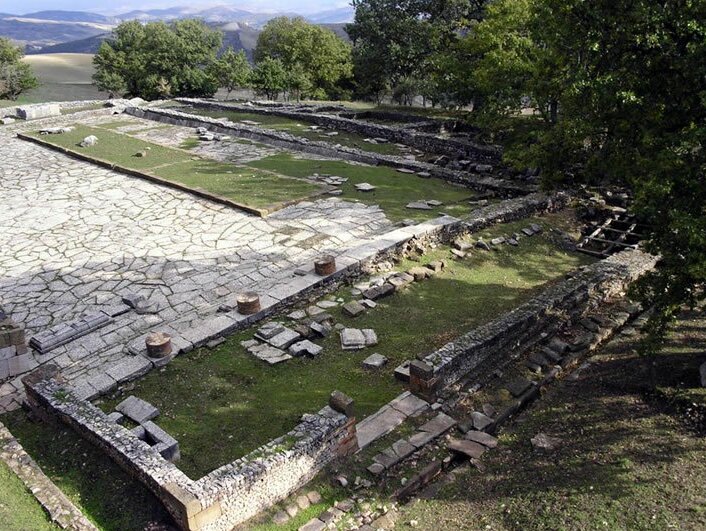
The archaeological area contains an important federal sanctuary in Lucania, located in a wooded area near a spring and dedicated to Mefite, an osca goddess characterized by the power to heal with water. In the 2nd century B.C. the sacred area underwent an imposing restructuring, linked to the Roman presence in the territory, and remained active until the first half of the 1st century A.D. The numerous inscriptions found in it that present writing in Osca language document a strong identity connotation of the Lucanian community. The sacred complex consists of a churchyard, a large area paved with large irregular limestone slabs, in the middle of which is placed the so-called "altar". Around the churchyard there are a series of rooms that bear traces of the restructuring and monumentalisation of the Roman period. Central is the role of water, an element linked to the Lucanian divinity, as a symbol of purification, fertility and wealth; in the churchyard there is the drainage channel of the spring waters captured and led to the sacred area. Significant are also the hydraulic works of the Roman age for the runoff of water that characterize some of the environments outside the churchyard. Recent surveys carried out by the Basilicata Archaeological Heritage Office have made it possible to gain a better understanding of the Lucanian period with the discovery of a large wall that bounded the sacred area towards the valley, obliterated in one of the subsequent phases of monumentalisation and restructuring of the sacred area due to the continuous landslides that have affected the area since ancient times.


🗺 L'app des trésors cachés

Plan your visit to Vaglio Basilicata

Suggested itinerary near Basilicata: archaeological area of Vaglio

MAJ+
500.000+ travelers worldwide
  1. 🌅
    Morning
    Basilicata: archaeological area of Vaglio
    📍 Vaglio Basilicata
  2. ☀️
    Afternoon
    Peasant House of Acerenza
    📍 11.8 km · Vaglio Basilicata
  3. 🌆
    Evening
    Acerenza and the winged dragon
    📍 11.8 km · Vaglio Basilicata

Buy Unique Travel Experiences

Powered by Viator

See more on Viator.com

Explore nearby · Vaglio Basilicata

Frequently Asked Questions

The sanctuary was dedicated to Mefite, an Osca goddess known for her healing powers associated with water. She was venerated by the Lucanian community, and water played a central role in religious rituals and purification ceremonies at this sacred site.
The sacred area was most active from the 2nd century B.C. through the first half of the 1st century A.D., with significant restructuring occurring in the 2nd century B.C. due to Roman influence in the territory. This period saw the monumentalisation of the complex with new architectural elements and hydraulic systems.
The numerous inscriptions discovered at the site are written in the Osca language and provide important documentation of the strong cultural and religious identity of the Lucanian community. These texts are crucial for understanding pre-Roman Italic civilization and local spiritual practices in ancient Basilicata.
Water was central to the worship of Mefite, symbolizing purification, fertility, and wealth in Lucanian religion. Visitors can still see the drainage channels that captured spring waters and directed them through the sacred area, as well as Roman-era hydraulic works that managed water runoff throughout the complex.
Recent surveys by the Basilicata Archaeological Heritage Office uncovered a large defensive wall that once bounded the sacred area toward the valley during the Lucanian period. This wall was later obliterated during Roman restructuring phases, helping archaeologists better understand the site's evolution and the continuous geological challenges posed by landslides in the area.