





← Back

Castel dell'Ovo

Via Eldorado, 3, 80132 Napoli, Italia ★★★★☆ 511 views
Molly Ferguson
Napoli
🏆 AI Trip Planner 2026

Get the free app

Discover the best of Napoli with Secret World — the AI trip planner with 1M+ destinations. Get personalized itineraries, hidden gems and local tips. Free on iOS & Android.

🧠 AI Itineraries 🎒 Trip Toolkit 🎮 KnowWhere Game 🎧 Audio Guides 📹 Videos
Scan to download iOS / Android
Scan for AppGallery Huawei users

About Castel dell'Ovo

Castel dell'Ovo - Napoli | Secret World Trip Planner

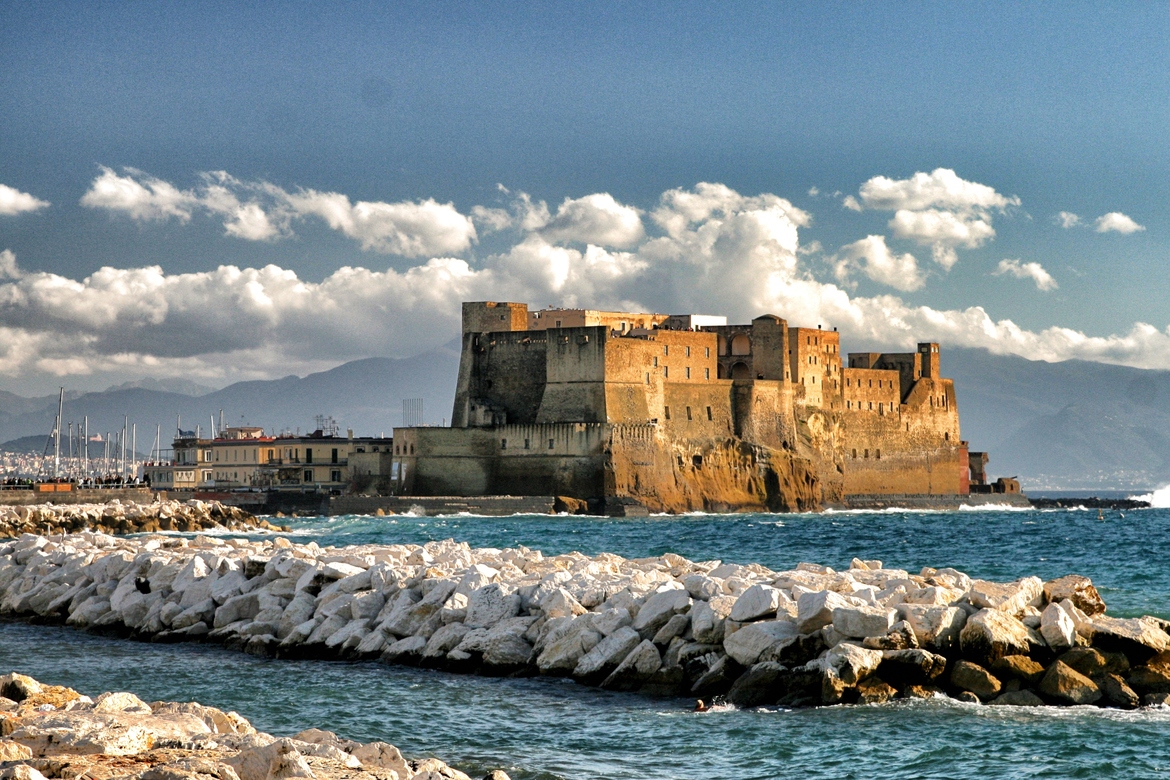
On the ancient Islet of Megaride rises imposingly the Castel dell'Ovo. One of the most fanciful Neapolitan legends would trace its name to the egg that Virgil is said to have hidden inside a cage in the castle's basement. The place where the egg was kept, was closed by heavy locks and kept secret since from " quell'ovo pendevano tutti li facti e la fortuna dil Castel Marino."

Castel dell'Ovo - Napoli | Secret World Trip Planner

From that moment on, the fate of the Castle, along with that of the entire city of Naples, was linked to that of the egg. The chronicles report that, at the time of Queen Giovanna I, the castle suffered extensive damage due to the collapse of the archway that joins the two rocks on which it is built, and the Queen was forced to solemnly declare that she had provided for the replacement of the egg to prevent panic from spreading through the city for fear of new and more serious disasters COme already mentioned stands on the islet of Megaride, consisting of two rocks joined together by a large archway. On this islet the Cumanians (of Greek-Euboic origin) landed in the mid-seventh century BC and then founded on the back of Mount Echia the city (or, at least, an organized settlement) of Partenope, the necropolis of which was discovered in 1949 at Via Nicotera 10, while the foundations were being dug for the construction of a building that replaced another destroyed by bombing in the last war. On the islet and on Mount Echia, in the first century B.C., during Roman rule, the famous villa of Lucius Licinius Lucullus was built, which probably extended with gardens and fountains as far as the present Piazza Municipio, as a structure unearthed by recent excavations under Castelnuovo seems to show. All that remains of the remembered villa are the ruins of the columns in the so-called "Hall of Columns," which, during the early Middle Ages, was used as the refectory of one of the convents that were built on the islet, and the remains of a nymphaeum on the terrace of Monte Echia

Castel dell'Ovo - Napoli | Secret World Trip Planner
🗺 L'app des trésors cachés

Plan your visit to Napoli

Suggested itinerary near Castel dell'Ovo

MAJ+
500.000+ travelers worldwide
  1. 🌅
    Morning
    Castel dell'Ovo
    📍 Napoli
  2. ☀️
    Afternoon
    Naples: Castle dell'Ovo and its legend - Secret World
    📍 0.1 km · Napoli
  3. 🌆
    Evening
    Naples & Food | Spaghetti with Clams
    📍 0.2 km · Napoli

Buy Unique Travel Experiences

Powered by Viator

See more on Viator.com

Explore nearby · Napoli

Frequently Asked Questions

According to Neapolitan legend, the castle's name comes from an egg that the poet Virgil allegedly hid inside a cage in the castle's basement. The fate of both the castle and Naples was believed to be linked to this egg, and when the castle suffered damage during Queen Giovanna I's reign due to a collapsed archway, she publicly declared that she had replaced the egg to prevent panic among the city's residents.
Castel dell'Ovo stands on the ancient islet of Megaride, which consists of two rocks joined together by a large archway. The islet has a rich history dating back to the mid-seventh century BC when Greek-Euboic colonists (Cumanians) landed there and founded the settlement of Partenope.
The castle sits on the site of the famous villa of Lucius Licinius Lucullus, built during Roman rule in the first century BC. Visitors can see the ruins of columns in the 'Hall of Columns,' which was later converted into a convent refectory during the Middle Ages, as well as remains of a nymphaeum on the terrace of Monte Echia.
The necropolis of Partenope was discovered in 1949 at Via Nicotera 10 during the construction of a building that was replacing one destroyed in World War II bombing. This archaeological find provided important evidence of the organized settlement established by the Cumanians on Mount Echia in the seventh century BC.
The famous villa of Lucius Licinius Lucullus was likely an extensive property, probably extending with gardens and fountains as far as the present Piazza Municipio. This is evidenced by structures unearthed during recent excavations under Castelnuovo that show the villa's impressive scale and ambition.