
← Back

Cathedral of Santa Maria Assunta - Cathedral

Piazza del Duomo, 06049 Spoleto PG, Italia ★★★★☆ 136 views
Giulia Chirico
Spoleto
🏆 AI Trip Planner 2026

Get the free app

Discover the best of Spoleto with Secret World — the AI trip planner with 1M+ destinations. Get personalized itineraries, hidden gems and local tips. Free on iOS & Android.

🧠 AI Itineraries 🎒 Trip Toolkit 🎮 KnowWhere Game 🎧 Audio Guides 📹 Videos
Scan to download iOS / Android
Scan for AppGallery Huawei users

About Cathedral of Santa Maria Assunta - Cathedral

Cathedral of Santa Maria Assunta - Cathedral - Spoleto | Secret World Trip Planner

enne built in 1175 on the site where until twenty years earlier stood the 8th-century church destroyed by Frederick Barbarossa.

Consecrated by Pope Innocent III in 1198, work continued until the mid-13th century. While the square in front of the cathedral was built only in the following century and in the face of a series of demolitions of ancient buildings.

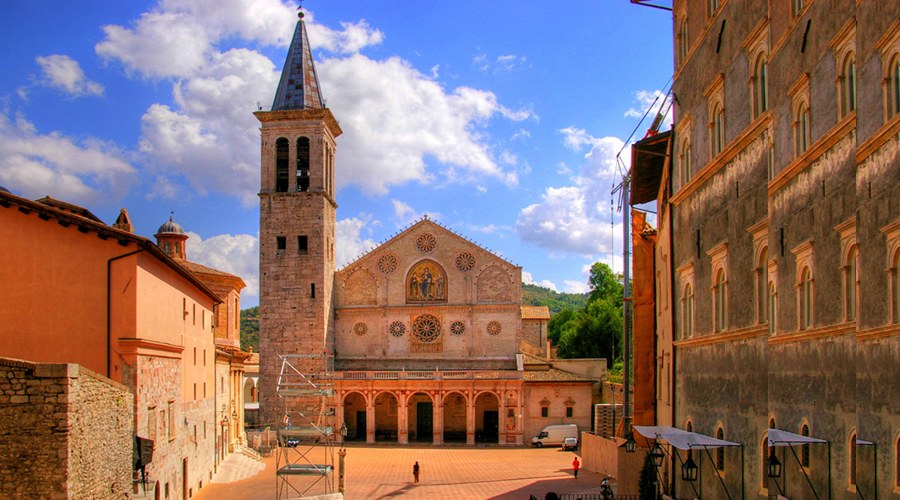
The facade is divided into three sections, the lower one is characterized by a portico, erected in the 15th century as well as the belfry cell that stands out on the left side. The central part, on the other hand, is characterized by a central rose window and four other lateral ones, while in the upper part we find three large arches, with the central one containing a mosaic depicting the Redeemer between the Madonna and St. John, above it we find three other rose windows.

The interior of the cathedral is rich in works of art, including the cycle of frescoes by Filippo Lippi, the Eroli Chapel frescoed by Pinturicchio, as well as the letter signed by St. Francis of Assisi and the tablet given as a symbol of peace by Frederick Barbarossa to the city of Spoleto. In addition, from the cathedral rectory it is possible to access the ancient Crypt of San Primiano, which is the only remaining room of the old arrangement of the cathedral buildings. Inside are some frescoes illustrating the stories of St. Benedict and St. Scholastica.


🗺 L'app des trésors cachés

Plan your visit to Spoleto

Suggested itinerary near Cathedral of Santa Maria Assunta - Cathedral

MAJ+
500.000+ travelers worldwide
  1. 🌅
    Morning
    Cathedral of Santa Maria Assunta - Cathedral
    📍 Spoleto
  2. ☀️
    Afternoon
    Menotti House
    📍 0 km · Spoleto
  3. 🌆
    Evening
    The Umbrian Valley, also known as the Spoletana Valley
    📍 0.1 km · Spoleto

Buy Unique Travel Experiences

Powered by Viator

See more on Viator.com

Explore nearby · Spoleto

Frequently Asked Questions

The cathedral was built starting in 1175 on the site of an 8th-century church that had been destroyed by Frederick Barbarossa, with construction continuing until the mid-13th century. It was consecrated by Pope Innocent III in 1198, making it an important religious landmark with nearly a century of construction work.
The facade is divided into three sections: the lower section features a 15th-century portico and a belfry cell on the left side, the central section has a large rose window surrounded by four lateral ones, and the upper section displays three grand arches with a mosaic of the Redeemer between the Madonna and St. John, topped by three additional rose windows. This multi-layered design showcases the cathedral's impressive architectural evolution over time.
The interior houses several masterpieces including a fresco cycle by Filippo Lippi, the Eroli Chapel frescoed by Pinturicchio, a letter signed by St. Francis of Assisi, and a peace tablet given by Frederick Barbarossa to Spoleto. Additionally, you can access the ancient Crypt of San Primiano from the cathedral rectory, featuring frescoes depicting stories of St. Benedict and St. Scholastica.

The Crypt of San Primiano is the only remaining room from the original cathedral building arrangement and can be accessed through the cathedral rectory. Inside, visitors will find beautiful frescoes illustrating the stories of St. Benedict and St. Scholastica, offering a glimpse into the cathedral's ancient history.
The cathedral was constructed in 1175 on the site of an 8th-century church that had been destroyed by Frederick Barbarossa approximately twenty years earlier. This rebuilding was a significant act of restoration and renewal for the city of Spoleto, ultimately creating one of Italy's most artistically rich cathedrals.