← Back

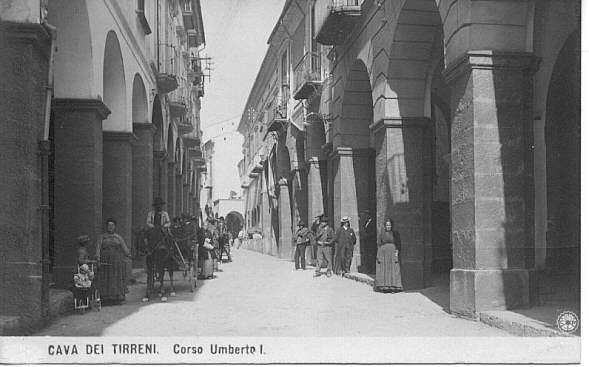
Cava dei Tirreni and its arcades

Cava de' Tirreni SA, Italia ★★★★☆ 180 views
Patricia Mur
Cava de' Tirreni
🏆 AI Trip Planner 2026

Get the free app

Discover the best of Cava de' Tirreni with Secret World — the AI trip planner with 1M+ destinations. Get personalized itineraries, hidden gems and local tips. Free on iOS & Android.

🧠 AI Itineraries 🎒 Trip Toolkit 🎮 KnowWhere Game 🎧 Audio Guides 📹 Videos
Scan to download iOS / Android
Scan for AppGallery Huawei users

About Cava dei Tirreni and its arcades

Cava dei Tirreni and its arcades - Cava de' Tirreni | Secret World Trip Planner

The village is a pretty little town, whose main street, Corso Umberto I, is characterized by a succession of arcades; it lies on the Naples-Salerno-Battipaglia railway and the Salerno-Valle di Pompei electric tramway. A singularity of Cava are the so-called games, towers from which in October, pigeon shooting is practiced with stone throwing.

Cava dei Tirreni and its arcades - Cava de' Tirreni | Secret World Trip Planner

The magnificent basin of Cava dei Tirreni is covered with dense vegetation, and produces especially wine, oil, corn, vegetables, mulberries, tobacco; the cotton textile industry is of considerable importance there. To the west of the village, about 4 km. away, stands the famous Trinity Abbey. Documents that record the history of Cava testify that before August 17, 1394, the day on which Pope Boniface IX with his own bull elevated "le terre de la Cava" to the dignity of a city, the lands of Cava had been inhabited by Etruscans, Romans of the Metellia dynasty, Lombards whose hunting habits have survived to the present day, Normans and Angevins. In 1011 the Benedictine Abbey of the Holy Trinity was founded, which over the years acquired important feudal and jurisdictional rights over the entire Cavese territory. About a century later the village of Corpo di Cava was built surrounded by walls and ramparts. Between the 14th and 15th centuries, the Borgo Scacciaventi developed, a fine example of a commercial center, characterized by arcades with round arches. Between the 1700s and 1800s, Cava was the destination of famous artists, and many exponents of the "Naples Landscape School," such as Morelli, Gigante, Poussin, and Palizzi painted their works there. From the 18th century until the early 20th century it was the destination of illustrious travelers such as Goethe, Lady Blessington, Walter Scott and John Ruskin who were deeply impressed by its beauty.

Cava dei Tirreni and its arcades - Cava de' Tirreni | Secret World Trip Planner
🗺 L'app des trésors cachés

Plan your visit to Cava de' Tirreni

Suggested itinerary near Cava dei Tirreni and its arcades

MAJ+
500.000+ travelers worldwide
  1. 🌅
    Morning
    Cava dei Tirreni and its arcades
    📍 Cava de' Tirreni
  2. ☀️
    Afternoon
    Franciscan Sanctuary of St. Francis and St. Anthony
    📍 0.1 km · Cava de' Tirreni
  3. 🌆
    Evening
    Cava dei Tirreni : Museum of the Benedictine Abbey of the Holy Trinity
    📍 2 km · Cava de' Tirreni

Buy Unique Travel Experiences

Powered by Viator

See more on Viator.com

Explore nearby · Cava de' Tirreni

Frequently Asked Questions

The main street, Corso Umberto I, is characterized by a distinctive succession of arcades, particularly the Borgo Scacciaventi district which features beautiful arcades with round arches dating back to the 14th-15th centuries. This architectural style makes it one of the most visually distinctive towns in the region and a must-see for architecture enthusiasts.
Cava dei Tirreni is conveniently located on the Naples-Salerno-Battipaglia railway line, making it easily accessible by train from both cities. Additionally, the Salerno-Valle di Pompei electric tramway also serves the town, providing convenient public transport options for visitors.
The magnificent Trinity Abbey, founded in 1011 as a Benedictine monastery, is located about 4 km to the west of the village and is one of Cava's most important historical landmarks. The abbey acquired significant feudal and jurisdictional rights over the entire Cavese territory throughout the Middle Ages and remains a testament to the town's rich religious heritage.
October is a unique time to visit if you want to witness the local 'games'—traditional events involving towers from which pigeon shooting is practiced using stone throwing, a hunting tradition that dates back centuries to the Lombard inhabitants. This singular custom offers visitors an authentic glimpse into the town's preserved cultural heritage.
Between the 1700s and 1800s, Cava was a destination for renowned artists like Morelli, Gigante, and Palizzi from the Naples Landscape School, as well as illustrious travelers including Goethe, Walter Scott, and John Ruskin, all of whom were deeply impressed by its natural beauty and picturesque setting. The town's stunning basin covered with dense vegetation and its artistic charm made it a cultural destination during this period.