
← Back

Church of St. John in Carbonara

Via Carbonara, Napoli, Italia ★★★★☆ 164 views
Zoe Bonnet
Napoli
🏆 AI Trip Planner 2026

Get the free app

Discover the best of Napoli with Secret World — the AI trip planner with 1M+ destinations. Get personalized itineraries, hidden gems and local tips. Free on iOS & Android.

🧠 AI Itineraries 🎒 Trip Toolkit 🎮 KnowWhere Game 🎧 Audio Guides 📹 Videos
Scan to download iOS / Android
Scan for AppGallery Huawei users

About Church of St. John in Carbonara

Church of St. John in Carbonara - Napoli | Secret World Trip Planner

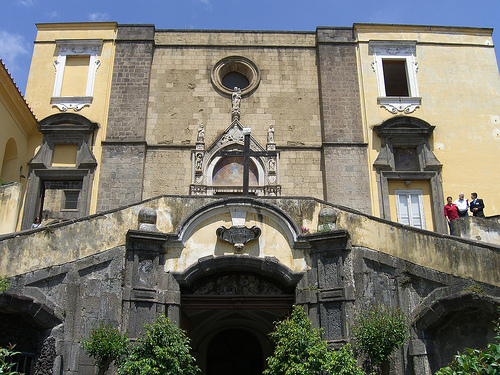
The church is the result of the annexation of several architectural structures: the double staircase on the facade conceals the entrance to the underlying church of the Consolation in Carbonara; the central portal leads to the Chapel of St. Monica, the left portal to the side entrance of the church of St. John. It is one of the richest churches in the city in terms of works of art. The beautiful church was built thanks to a nobleman, Gualtiero Galeota, who between the years 1339 and 1343 donated the land outside the city walls called "ad carbonetum" to the Augustinian Fathers, allowing them to found the monastery and church (Via Carbonara is still called this way today because in the Middle Ages it was a place used to collect garbage outside the city walls).

Church of St. John in Carbonara - Napoli | Secret World Trip Planner

With the arrival in Naples of King Ladislaus of Durazzo, a complete rebuilding of the church began and it substantially assumed its present appearance except for some changes and additions in the following centuries. The important entrance gives an idea of the importance of the church: it is accessed, in fact, by means of a monumental staircase built in the 1700s by Ferdinando Sanfelice, who built a double-ramp staircase to solve the problem of the differences in height between the street and the different entrances to the buildings that make up the complex architectural structure.

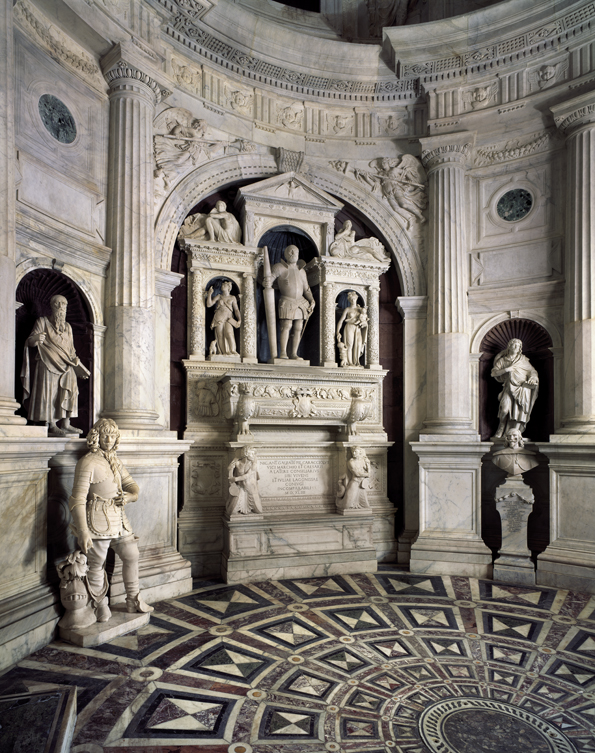
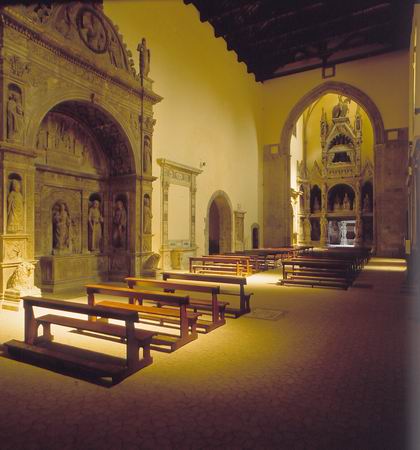
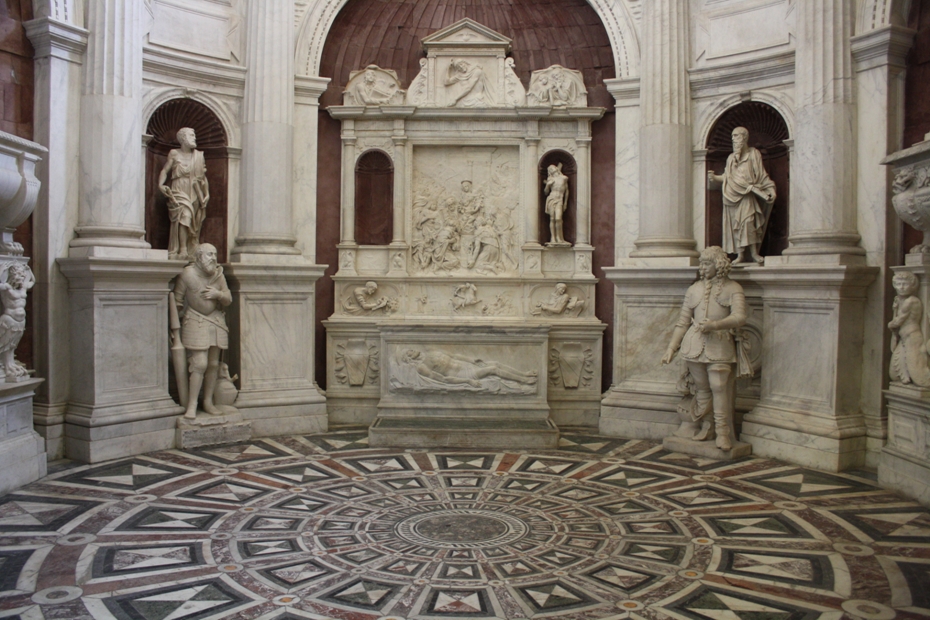
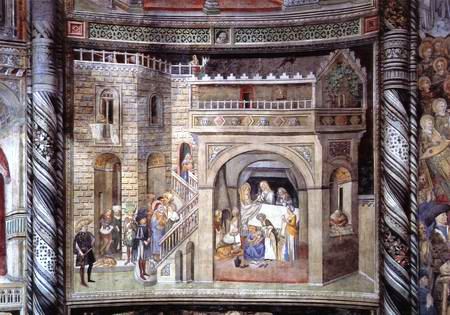
The entire complex includes, in fact, two other buildings of worship, which are the church of Santa Monica and the church of the Consolation in Carbonara; nearby there is also another church, that of the Pietatella in Carbonara. Inside the monumental church of St. John in Carbonara, built on a rectangular plan, stands the mausoleum of King Ladislaus, built between 1414 and 1428 and full of allegorical figures. Behind the monument is the Caracciolo Chapel of the Sun, with the monument of Sergianni Caracciolo, great syniscalco and lover of Queen Giovanna. Other chapels, such as those of the Miroballo, Somma, and Caracciolo di Vico families, are rich in statues and important sepulchral monuments. The walls have frescoes by the school of Giotto depicting scenes of monastic life and the birth of the Virgin. To the right of the chancel is the Caracciolo di Vico Chapel, the sacristy, the altar of Our Lady of Grace, and the Miroballo burial monument. Sixteen works by Giorgio Vasari, made for the church's sacristy, were also part of the church. The panel paintings, were commissioned in 1545 by the Order of the Augustinians, and made by Vasari in 1546, with the collaboration of Cristofano Gherardi, one of his most talented collaborators. They were 16 paintings on panel, decorating the doors of the sacristy cupboards depicting Stories from the Old Testament and Episodes from the Life of the Baptist. The beautiful works have undergone rigorous restoration and are also on display at Capodimonte.
Church of St. John in Carbonara - Napoli | Secret World Trip Planner
🗺 L'app des trésors cachés

Plan your visit to Napoli

Suggested itinerary near Church of St. John in Carbonara

MAJ+
500.000+ travelers worldwide
  1. 🌅
    Morning
    Church of St. John in Carbonara
    📍 Napoli
  2. ☀️
    Afternoon
    Naples | Church Santi Apostoli
    📍 0.1 km · Napoli
  3. 🌆
    Evening
    Naples: The lizard transformed into wood
    📍 0.2 km · Napoli

Buy Unique Travel Experiences

Powered by Viator

See more on Viator.com

Explore nearby · Napoli

Frequently Asked Questions

The church is actually a complex of several annexed architectural structures, including the churches of St. Monica and the Consolation in Carbonara. The famous double-ramp staircase was built in the 1700s by architect Ferdinando Sanfelice to solve height differences between the street level and the various building entrances that make up this unique composite structure.
The church was founded in 1339-1343 when nobleman Gualtiero Galeota donated land called 'ad carbonetum' (named after a medieval garbage collection site) to the Augustinian Fathers. King Ladislaus of Durazzo later commissioned a complete rebuilding, and the church now houses his mausoleum (1414-1428), making it one of Naples' most historically important religious sites.
The church is one of Naples' richest in terms of art collections, featuring the elaborate mausoleum of King Ladislaus filled with allegorical figures, the Caracciolo Chapel of the Sun with the monument of Sergianni Caracciolo, and numerous family chapels including those of the Miroballo, Somma, and Caracciolo di Vico families. The rectangular-plan church offers visitors an exceptional concentration of medieval and Renaissance artistic treasures.
The church is located on Via Carbonara in Naples, a street that still bears the name from its medieval origins as a garbage collection site outside the city walls. The street name has been preserved for centuries, making it easy for visitors to locate this historic religious complex in the city.
The monumental double-ramp staircase was designed by renowned architect Ferdinando Sanfelice in the 1700s as an elegant engineering solution to the height differences between the street and the church's various entrances. This impressive architectural feature has become iconic to the church's appearance and is one of the first things visitors notice when approaching the complex.