Fourteen Roman columns support the portico of the Great Mosque of Kairouan, each taken from temples and basilicas of Roman Africa and reassembled here with an aesthetic logic that mixes white marble, gray granite, and yellow limestone. No column is identical to another: Corinthian capitals alternate with smooth or fluted shafts, creating a hybrid forest that tells the story of two overlapping civilizations. Walking under these horseshoe arches means physically crossing the moment when the ancient world became medieval.

The mosque was founded in 670 AD by the Arab general Uqba ibn Nafi, during the first great Islamic expansion in North Africa. In its current form, however, the building primarily reflects the renovations of the Aghlabid dynasty, which ruled the region between 800 and 909 AD and transformed Kairouan into one of the most influential intellectual and religious centers of the Mediterranean. It is one of the oldest mosques in the Islamic world still in operation, and every architectural detail bears the mark of those centuries of layering.
The mihrab of the 9th century: ceramics that cannot be found elsewhere
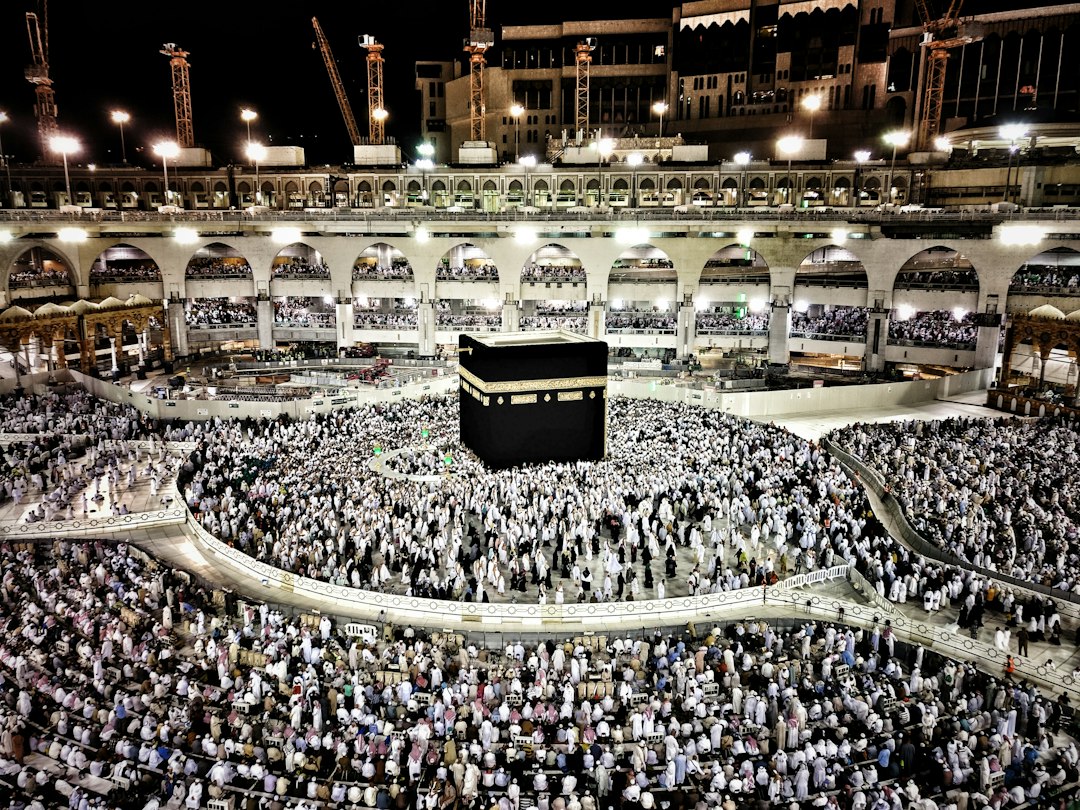
The most extraordinary element of the interior is the mihrab, the niche that indicates the direction of Mecca. Its walls are covered with over one hundred and forty metallic luster tiles, imported from Baghdad around 862 A.D. on the commission of the Aghlabid emir Abu Ibrahim Ahmad. The luster technique, which involves a double firing and the use of metallic oxides to achieve golden and mother-of-pearl reflections, was at the time a specialty of Mesopotamian artisans. These tiles represent one of the oldest surviving examples of this type of Islamic ceramics in the world, and non-Muslims can observe them up close from the entrance of the prayer hall, without being able to access the interior.
The mihrab is flanked by two columns of Carrara marble with finely carved capitals, probably reused from Roman times. The contrast between the coldness of the white marble and the amber warmth of the ceramics creates a visual effect that no photograph can fully capture. The minbar, the carved teak pulpit, also dates back to the 9th century and is considered the oldest existing carved wooden minbar in the Islamic world.
The minaret: the tower that defined a model
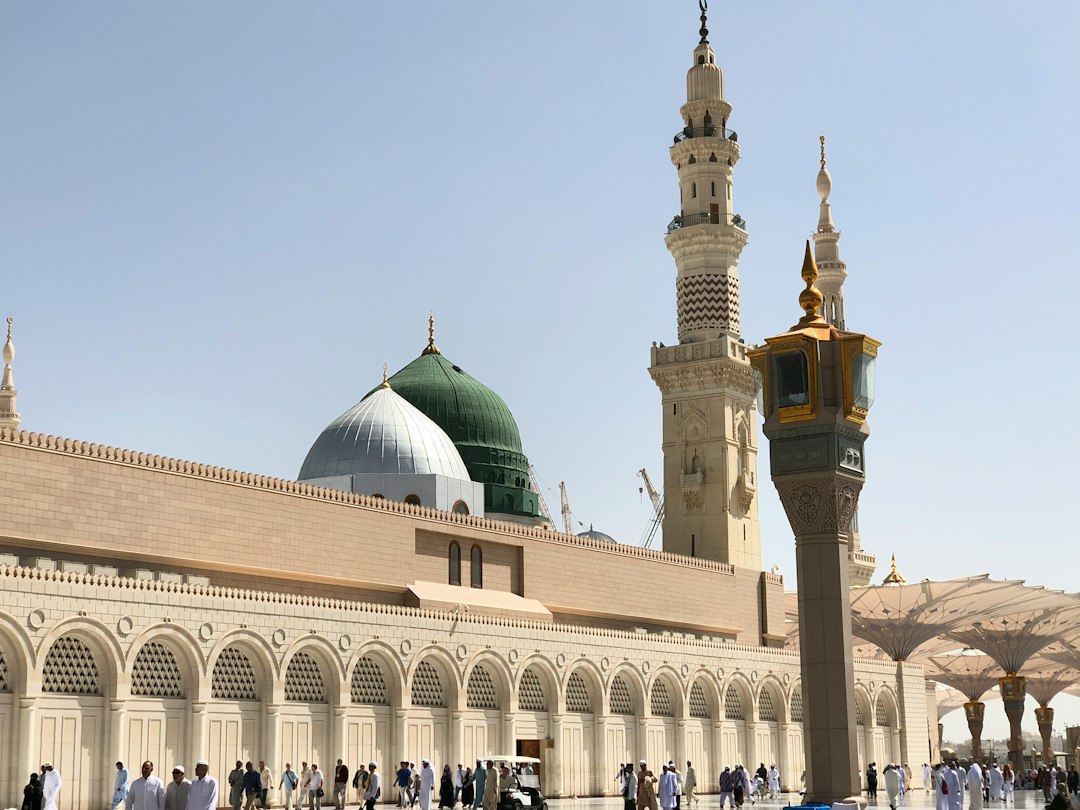
The three-level minaret that dominates the courtyard is a massive and almost military structure, built with squared stone blocks that resemble more a Roman watchtower than an Eastern bell tower. About 31 meters tall, it is considered the prototype of the square-plan minaret that later spread throughout the Maghreb and the Iberian Peninsula, up to the towers of the mosques in Seville and Marrakech. Its shape consists of three superimposed parallelepipeds of decreasing sizes, without superfluous ornaments: the elegance lies entirely in the proportion.
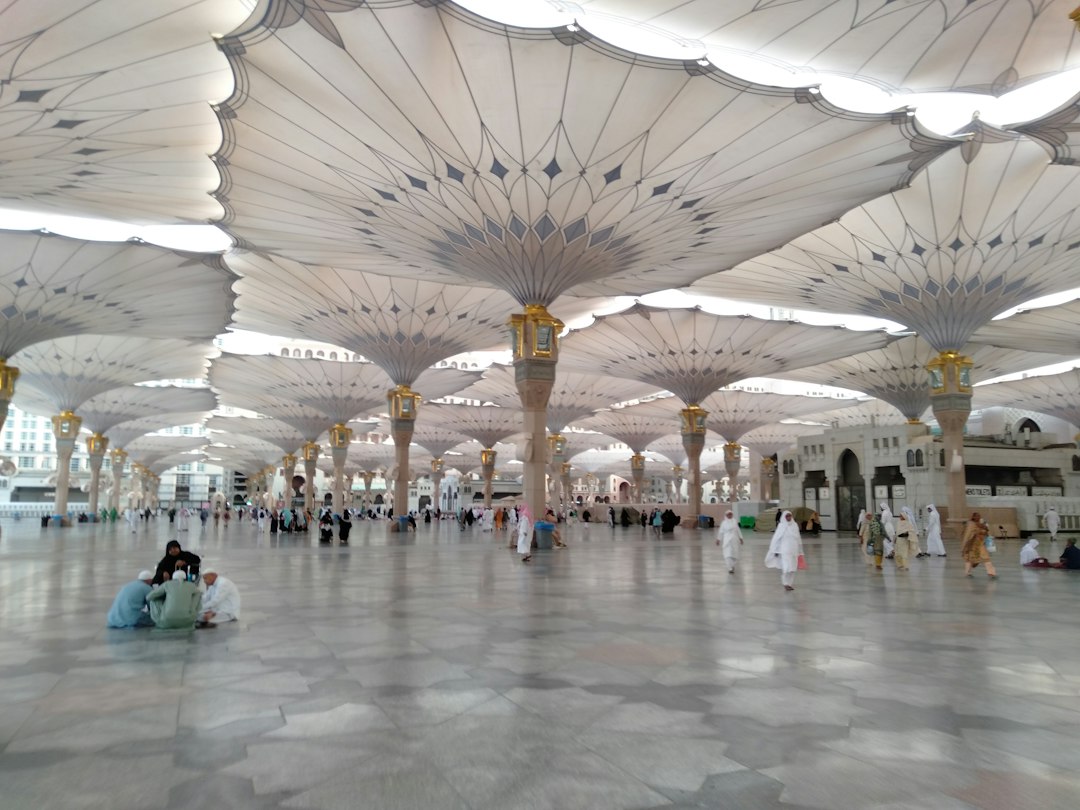
From the paved courtyard, which measures about 9,000 square meters, the minaret can be seen reflected in the large central basin that collected rainwater. The cistern, still visible, was a fundamental technical element in a Maghreb city where water was a precious resource. Today, the courtyard is the main access point for non-Muslim visitors, who can freely walk around the prayer hall without entering it.
The medina of Kairouan: an almost intact context

The Great Mosque is not an isolated monument: it is the heart of a medina declared UNESCO World Heritage in 1988, which still preserves its medieval urban structure with specialized souks, funduqs, and historic hammams. Unlike Tunis or Fez, Kairouan has not yet undergone massive tourist pressure, which means that the alleys around the mosque are mainly frequented by local residents. The shops sell carpets made using traditional Berber and Arab techniques, for which the city is famous throughout Tunisia.
The time needed to visit the mosque and stroll through the medina is about three to four hours. The entrance ticket for non-Muslims includes the mosque and other historical sites in the city, such as the Aghlabid cisterns. The best time to visit is early in the morning, when the slanting light illuminates the columns of the portico and the heat is not yet oppressive. Kairouan is easily reachable by bus or louage — the Tunisian collective taxi — from Tunis in about two hours, or from Sousse in less than an hour. During Ramadan, access times for non-Muslims are reduced: it is advisable to check in advance.