

A white marble triangle rises towards the blue sky of Rajasthan, casting a shadow that slowly glides along a graduated scale with the precision of a Swiss watch. It is neither an abstract sculpture nor a decorative monument: it is the Samrat Yantra, the largest gnomon in the world, capable of measuring local time with an accuracy of two seconds. We are inside the Jantar Mantar of Jaipur, one of the most extraordinary astronomical observatories ever built, and from the very first glance, it is clear that this place is unlike anything one might expect.
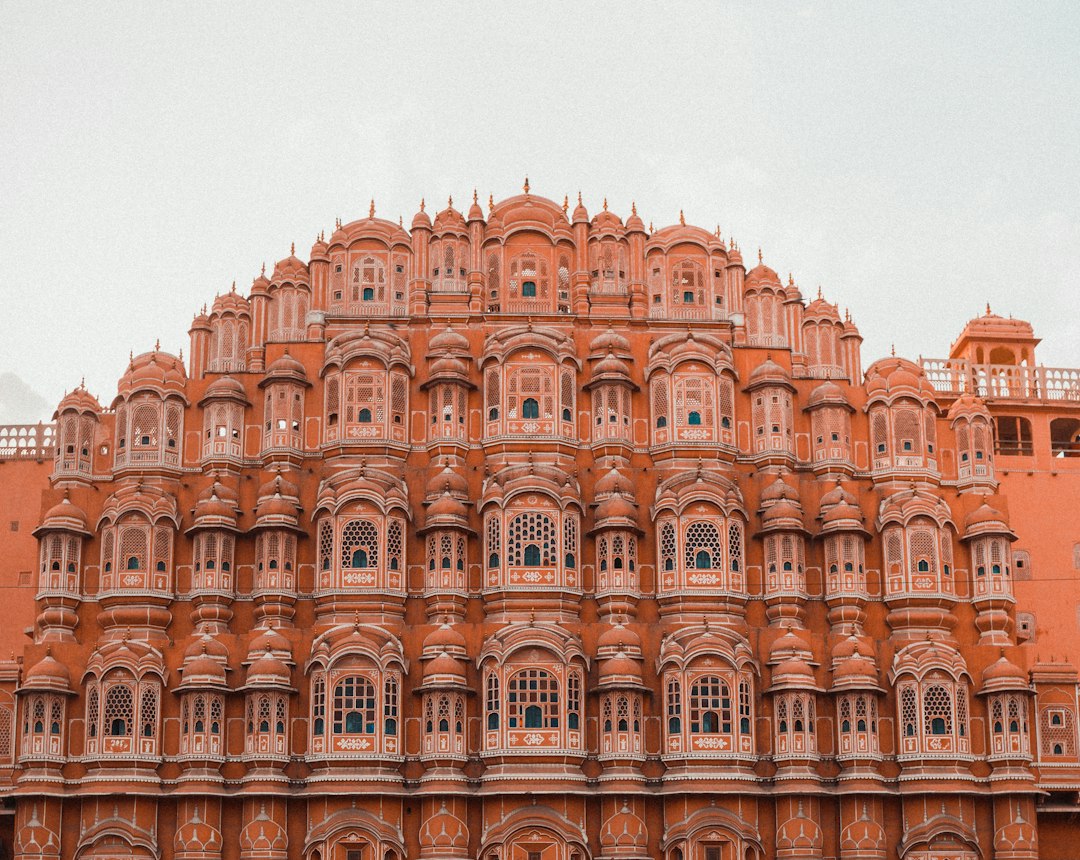
The complex was commissioned and designed by Maharaja Sawai Jai Singh II, the founder of the city of Jaipur, and built between 1724 and 1735. Jai Singh II was a passionate astronomer as well as a ruler: he was not satisfied with the metallic instruments in use at the time, which he believed were subject to distortions and inaccuracies, and decided to build his instruments directly in stone and masonry, on a monumental scale. The result was a place that today belongs to the heritage of humanity: in 2010, UNESCO inscribed the Jantar Mantar of Jaipur on the list of World Heritage Sites.
Nineteen instruments to read the sky

Inside the enclosure, there are 19 astronomical instruments, all built of masonry, stone, and marble. Each has a specific function: some measure the declination of the sun, others calculate the positions of the stars, and others determine the local time or predict eclipses. Walking among these instruments is a disorienting experience in the best sense of the term: the geometric shapes — arches, spheres, inclined steps, curved dials — seem to have come out of an architectural dream, yet every centimeter has a precise and verifiable function.
Among the most impressive instruments is the aforementioned Samrat Yantra, whose gnomon reaches a height of about 27 meters. The shadow cast moves about one millimeter every two seconds on the graduated dial, making it possible to read solar time with remarkable accuracy for an era when telescopes were still rudimentary. Equally fascinating is the Jai Prakash Yantra, a pair of concave hemispheres embedded in the ground, with taut wires that project the sun's shadow onto graduated scales: an instrument that served to verify the measurements of the others and that still works perfectly today.

An observatory in the context of 18th century Jaipur
Jai Singh II did not stop at Jaipur: he had similar observatories built in four other cities of India — Delhi, Varanasi, Ujjain, and Mathura — but the one in Jaipur is the largest, best preserved, and richest in instruments. The Maharaja had studied Arabic, European, and Indian astronomical texts, and had even sent emissaries to Europe to procure the latest astronomical tables. The Jantar Mantar was not an aesthetic whim, but a tool of governance: it was used to reform the calendar, establish the dates of religious festivals, and calculate the time accurately for the entire region.
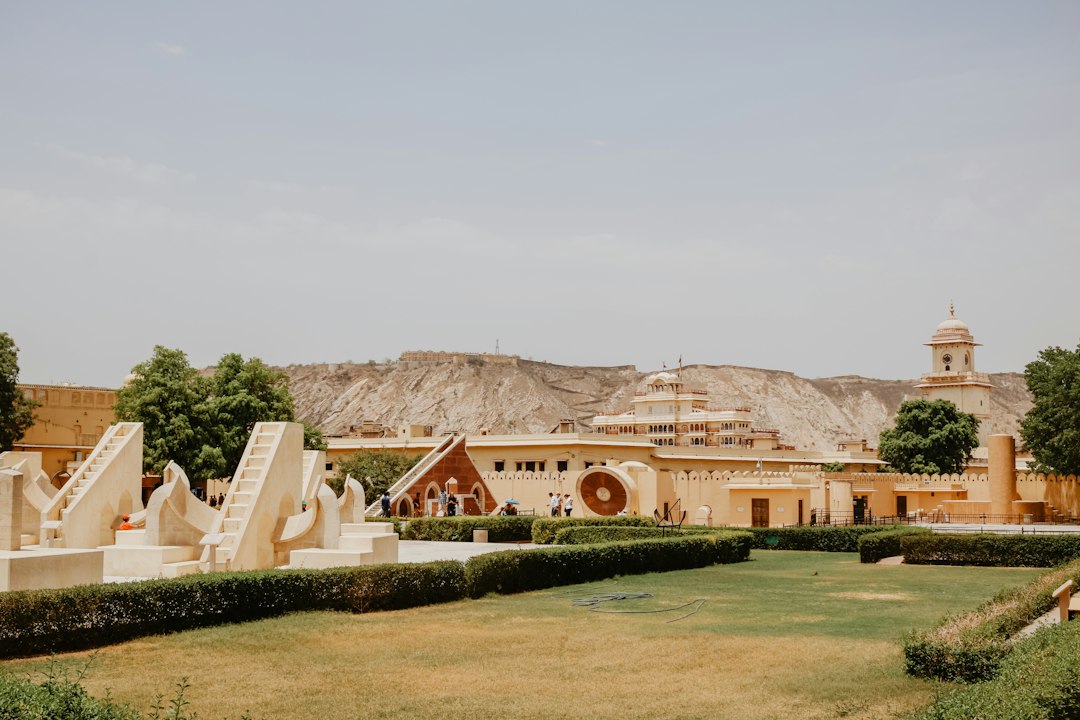
Today, the site is surrounded by the modern city of Jaipur, just a short walk from the City Palace in the heart of the old city. This contrast — the stone instruments of the 18th century surrounded by the sounds and colors of contemporary Rajasthan — adds an additional layer of charm to the visit. The outer walls of the enclosure protect a relative silence that allows one to focus on the shapes and details of the instruments.
How to visit the Jantar Mantar
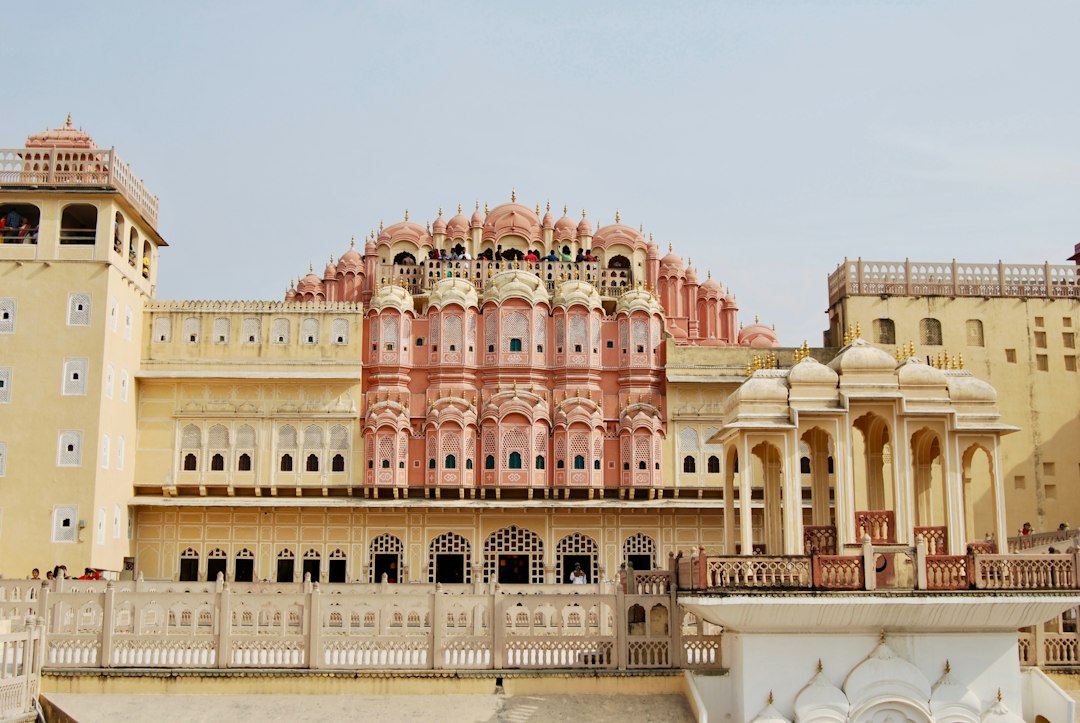
The site is open every day and the entrance ticket for foreign visitors is around 200 Indian rupees, a figure subject to change, so it is advisable to check the updated prices on-site or through official channels. The visit typically takes one and a half to two hours for those who want to understand the functioning of the main instruments, but it is possible to walk through the site more quickly if you are short on time.
The best time to visit is early in the morning, preferably before 9:00 AM, when the light is lateral and the shadows cast by the instruments are sharper and easier to read. During the central hours of the day, the heat can be intense, especially between April and June. An official audio guide is also available, which helps to understand the function of each instrument: without an explanation, some of the nineteen artifacts may seem like architectural forms lacking logical sense, while with the right context they reveal a precise and fascinating mathematical logic. Walking from the City Palace takes just a few minutes and allows you to pass through the lively bazaar of the old city.
What remains after the visit
The Jantar Mantar in Jaipur is not a place that is easily forgotten. Not because it is spectacular in the conventional sense of the term, but because it forces one to think: about how a man of the eighteenth century could conceive and create instruments of such precision, about how science and power intertwined in the court of the Maharajas, and about how stone can become a clock, a calendar, a map of the sky. Jai Singh II left something more enduring in Jaipur than a palace: he left a way of looking up.