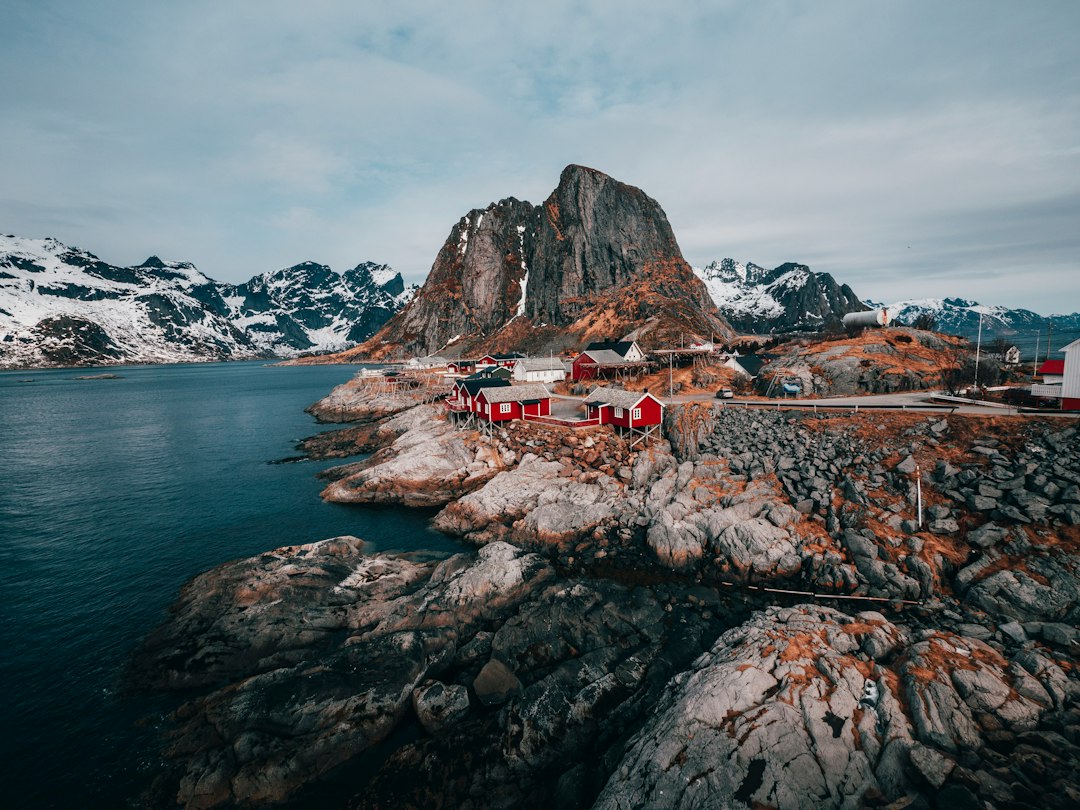

The granite walls plunge steeply into the North Atlantic without warning, as if someone had ripped a mountain range from the continent and sunk it halfway into the ocean. This is the first visual impact of the Lofoten Islands, a Norwegian archipelago that stretches for about 170 kilometers beyond the Arctic Circle, in Nordland county. Svolvær, the main center of the archipelago, is located on the island of Austvågøya and serves as a logistical landmark for those arriving in this part of Norway.
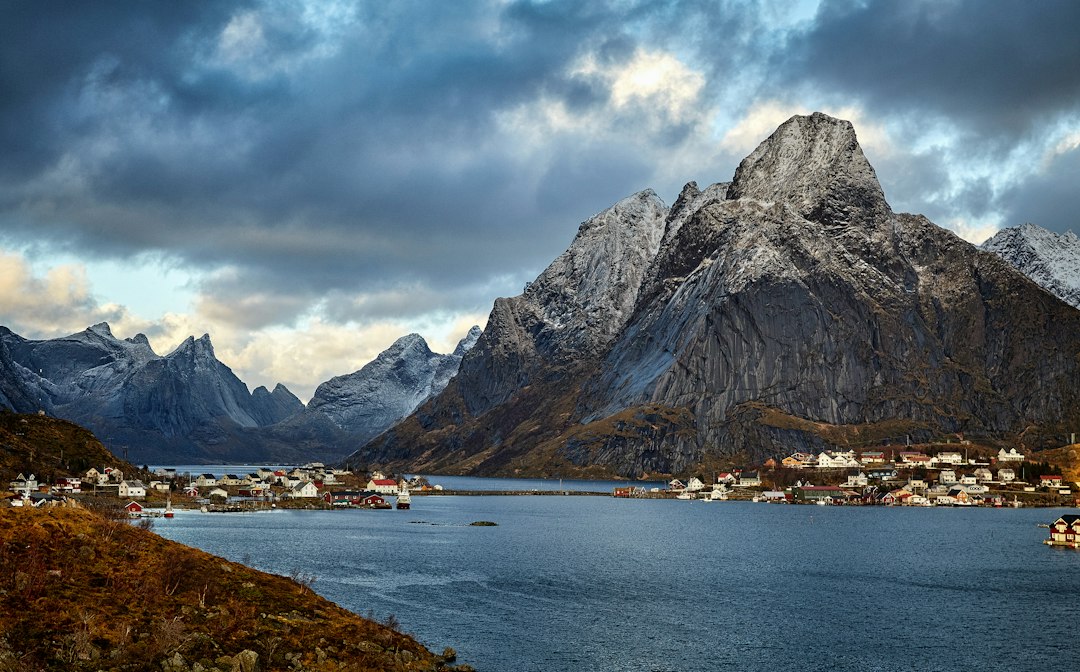
What makes the Lofoten geographically anomalous is the temperature: despite being located beyond the 68th parallel north, the currents of the Gulf Stream keep the climate relatively mild compared to other areas at the same latitude. In winter, temperatures rarely drop below -10°C, while in summer, the fishing villages come alive under the continuous light of the midnight sun, a phenomenon that lasts from late May to mid-July.
The rorbuer: the fishermen's cabins become a symbol
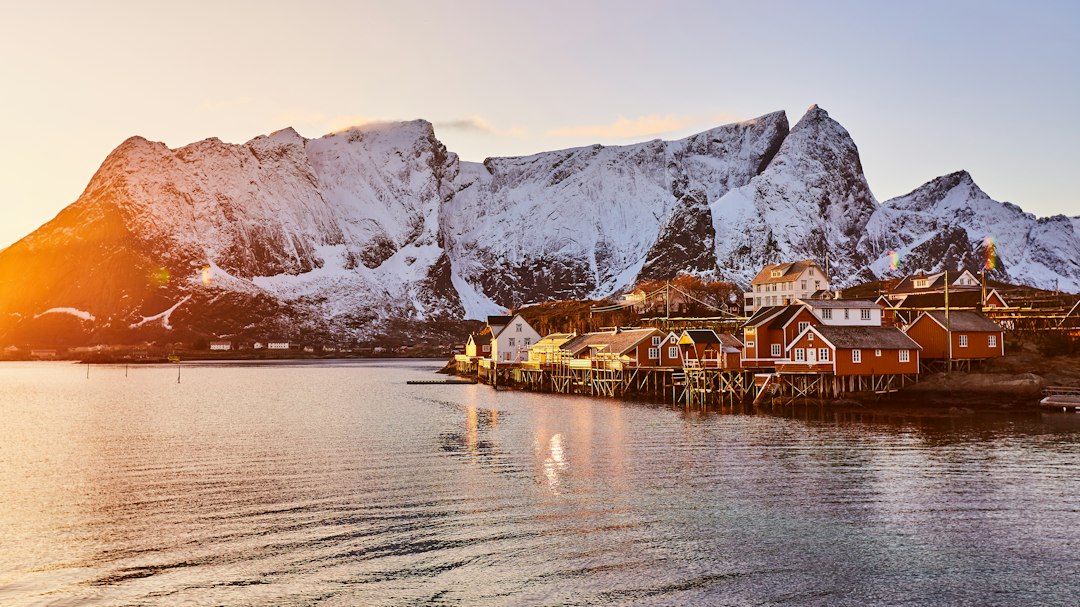
Along the shores of the fjords, the most photographed structures in the Lofoten are the rorbuer, the traditional red-painted stilt cabins that fishermen used as seasonal accommodation during the cod fishing. The tradition dates back to the 12th century, when King Øystein ordered the construction of these structures to host fishermen coming from all over Norway during the fishing season, from January to April. Today, many of these buildings have been converted into tourist accommodations, and renting one in Henningsvær or Reine — considered one of the most beautiful villages in the archipelago — allows you to literally sleep on the water, with the snow-capped peaks reflecting in the fjord outside the window.
The village of Å in Lofoten, at the southern tip of the archipelago, hosts the Norsk Fiskeværsmuseum, the Norwegian fishing village museum, which preserves original 19th-century buildings and documents daily life related to Arctic cod fishing. The cod produced here — the air-dried stockfish — has been exported mainly to Italy and Portugal for centuries.

Aurora borealis and midnight sun: two opposite seasons
The Lofoten Islands are one of the few places in the world where it is possible to witness both the aurora borealis and the midnight sun, depending on the time of year. The auroras are visible from October to April on nights with clear skies and low artificial light activity — conditions that are easy to find in this archipelago, given that the entire resident population is about 24,000 people spread over a vast territory. The statistical peak of sightings concentrates around the equinoxes of September-October and March.

In summer, on the other hand, the phenomenon of the midnight sun completely transforms the rhythm of the day. Many local agencies organize kayaking outings after 10:00 PM, when the slanting light colors the mountains orange and pink without ever bringing darkness. It is a disorienting experience in the literal sense of the term: the body loses its circadian references, and one finds oneself paddling among the fjords at 11:30 PM with light that seems like late afternoon.
How to get around and when to arrive

The main access to the Lofoten Islands is through Svolvær Airport (IATA code: SVJ), connected to Oslo with direct flights operated by Widerøe. Alternatively, it is possible to arrive by ferry from Bodø, with a crossing of about three and a half hours that already offers panoramic views of the archipelago. Once on the island, the E10 is the state road that connects the main villages from Svolvær to Å, which can be traveled by car or by bicycle for the more trained.
The most useful practical advice concerns the booking of accommodations: the rorbuer in the most sought-after locations — particularly in Reine and Nusfjord — sell out months in advance during the summer season (June-August) and during the aurora period (February-March). Booking at least four or five months in advance is not excessive. Those visiting in winter must also consider that some mountain roads and some trails may be closed due to snow, and that the hours of natural light are very limited: in December, Svolvær receives less than two hours of sunlight per day.
The marine ecosystem and active fishing
The waters around the Lofoten Islands are among the most productive in the northern Atlantic. Arctic cod — skrei in Norwegian — migrates every winter from the Barents Sea to these waters to spawn, and seasonal fishing is still a real economic practice, not just folkloric. Seeing the wooden racks loaded with cod drying in the open air between February and May is a sight that belongs to the daily life of the archipelago, not to a museum reconstruction. Sea eagles, with a wingspan that can exceed two meters, regularly soar over the ports in search of fish scraps — a detail that no photograph can fully capture.