← Back

Museum of Anatomy

Via Luciano Armanni, 5, 80138 Napoli, Italia ★★★★☆ 310 views
Linda Sartori
Napoli
🏆 AI Trip Planner 2026

Get the free app

Discover the best of Napoli with Secret World — the AI trip planner with 1M+ destinations. Get personalized itineraries, hidden gems and local tips. Free on iOS & Android.

🧠 AI Itineraries 🎒 Trip Toolkit 🎮 KnowWhere Game 🎧 Audio Guides 📹 Videos
Scan to download iOS / Android
Scan for AppGallery Huawei users

About Museum of Anatomy

Museum of Anatomy - Napoli | Secret World Trip Planner

Remained closed for more than 30 years on March 14, 2016, it reopened its doors. The Anatomical Museum of the Second University of Naples (SUN) is one of the most interesting and oldest scientific institutions in the field. Today it is part of SUN's MUSA (university museum center) along with the Pharmacological Museum, university museum archives, Pharmacology, Stomatology, Bibliography and Art sections.

Museum of Anatomy - Napoli | Secret World Trip Planner

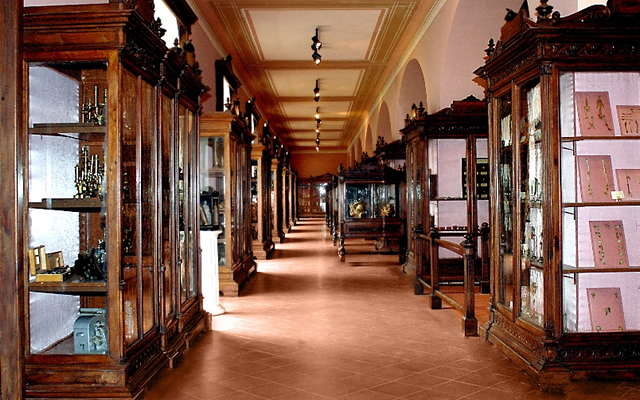
The museum collections of the Museum of Anatomy derive from both the ancient collections of historic Neapolitan hospitals and those of the naturalists' cabinets of the sixteenth and seventeenth centuries.

The Museum has very important and rich collections that also include instrumentation such as anatomical instruments, microtomes, microscopes, scales, micromanipulator, etc., which make it possible to document the evolution and achievements of medicine in different eras.

Museum of Anatomy - Napoli | Secret World Trip Planner

The museum began to take "shape" thanks to the work of Giovanni Antonelli, professor of anatomy from 1870 to 1914, who arranged the exhibit in its current location in the convent of Santa Patrizia. The museum reopened in part in 1997 after years of closure following the 1980 earthquake, but admission was restricted to insiders.

The anatomical waxes, those related to petrifications, Indian trophies, skeletal collections, and fetal monstrosities are famous from the museum.
Museum of Anatomy - Napoli | Secret World Trip Planner

Very important is the Pharmacology section, which preserves a vast amount of artifacts and equipment testifying to the development of scientific research, in general, and pharmacology, in particular.


🗺 L'app des trésors cachés

Plan your visit to Napoli

Suggested itinerary near Museum of Anatomy

MAJ+
500.000+ travelers worldwide
  1. 🌅
    Morning
    Museum of Anatomy
    📍 Napoli
  2. ☀️
    Afternoon
    Teatro Greco-Romano - Naples
    📍 0.1 km · Napoli
  3. 🌆
    Evening
    Church of Santa Maria delle Grazie Maggiore in Caponapoli
    📍 0.2 km · Napoli

Buy Unique Travel Experiences

Powered by Viator

See more on Viator.com

Explore nearby · Napoli

Frequently Asked Questions

The Museum of Anatomy at the Second University of Naples (SUN) reopened its doors on March 14, 2016, after remaining closed for more than 30 years. While it had partially reopened in 1997 following the 1980 earthquake, admission was restricted to insiders until the full public reopening in 2016.
The museum is particularly renowned for its anatomical waxes, petrifications, Indian trophies, skeletal collections, and fetal monstrosities. These exceptional specimens showcase centuries of anatomical knowledge and scientific study dating back to the naturalists' cabinets of the sixteenth and seventeenth centuries.
The Museum of Anatomy is housed in the convent of Santa Patrizia in Naples and was shaped by Giovanni Antonelli, a professor of anatomy from 1870 to 1914, who arranged the exhibits in their current location. The museum is now part of SUN's MUSA (university museum center), which also includes the Pharmacological Museum and other specialized sections.
The museum features an impressive collection of historical medical instrumentation including anatomical instruments, microtomes, microscopes, scales, and micromanipulators that document the evolution and achievements of medicine across different eras. These artifacts, combined with the museum's Pharmacology section, provide comprehensive insight into the development of scientific research and medical practice.
The museum's collections derive from both the ancient collections of historic Neapolitan hospitals and the naturalists' cabinets of the sixteenth and seventeenth centuries, making it one of the oldest and most important scientific institutions in the anatomical field. This rich heritage reflects centuries of medical knowledge accumulation and scientific discovery in Naples.