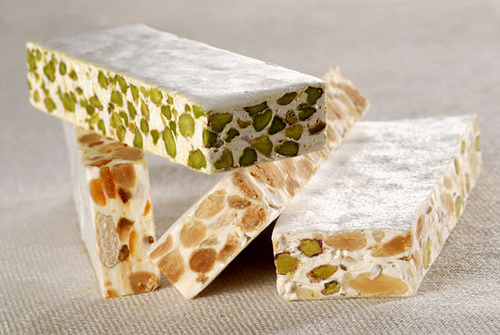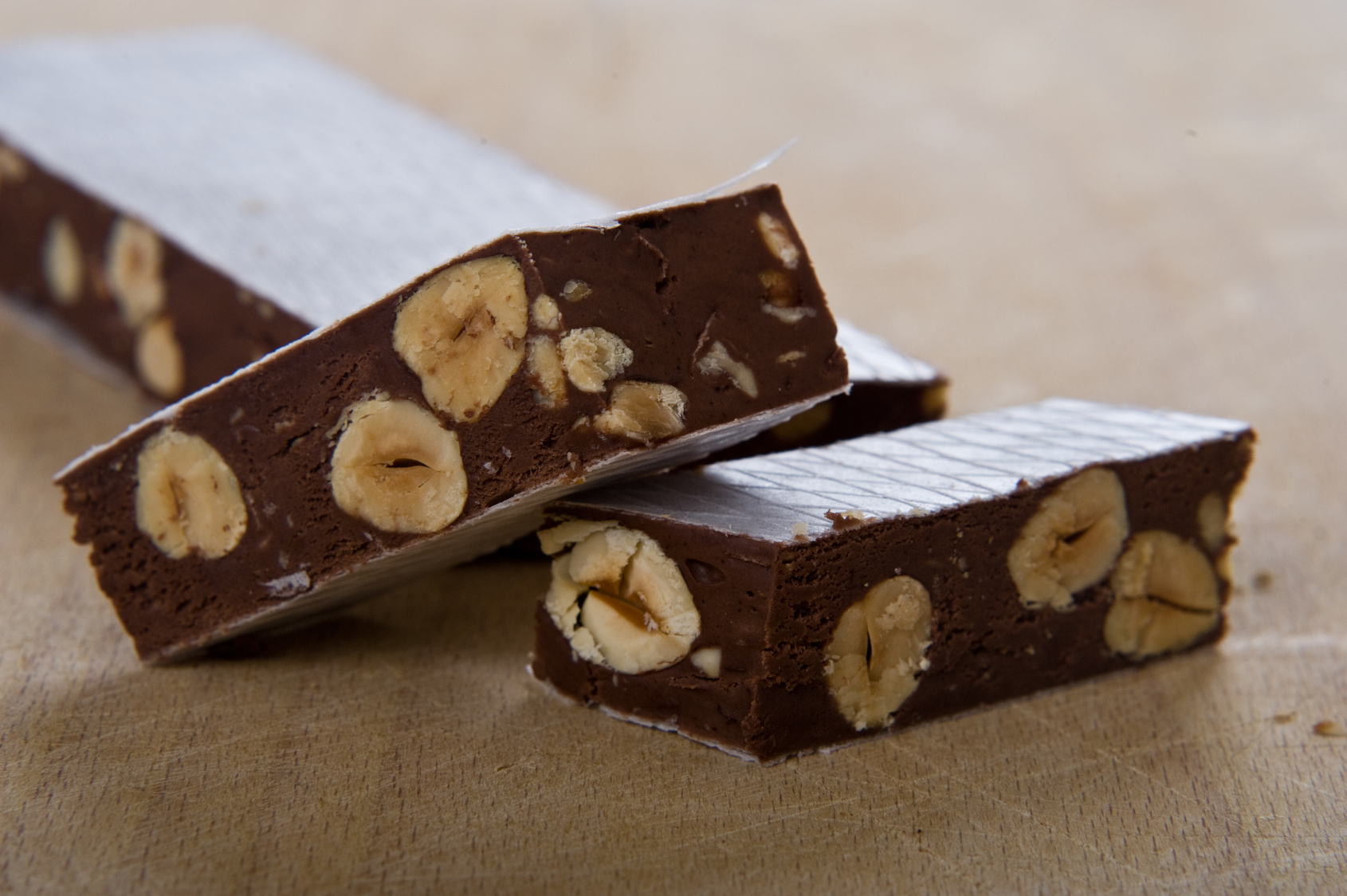

Nougat: where and when Cremona, October 25, 1441: Bianca Maria Visconti marries Francesco Sforza. The wedding, which secured the lineage's more than half-century rule over the duchy of Milan, is inextricably linked to the birth of nougat. The first example of this sweet, created for the wedding dinner, was said to be shaped like the Torrazzo, the bell tower of Cremona's cathedral. And from Torrazzo to nougat is a short road, etymologically speaking.
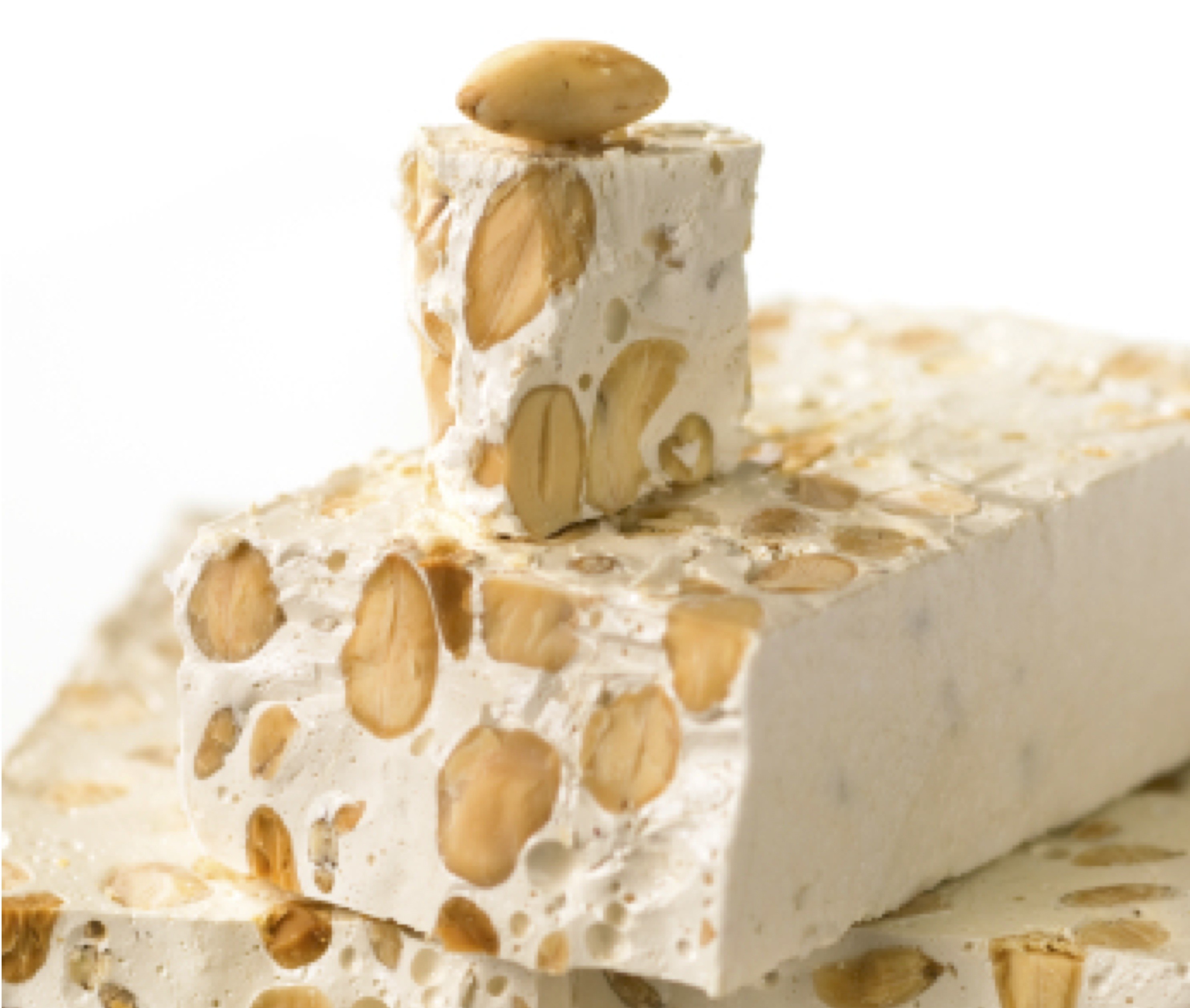
It is a fascinating story, but too good to be true: it seems to have first appeared in a somewhat biased and somewhat too recent monograph, published by the Cremona Chamber of Commerce in 1914, as Carla Bertinelli Spotti states on page 22 of Il Torrone di Cremona (Cremonabooks, 2002), a similarly Cremonese publication, but far more serious and documented. That the relationship between Cremona and nougat is very old, however, is an established fact: some letters preserved in the city's archives attest to its presence in some apothecaries' and aromatari's stores since the 16th century. And before that?
If we broaden our search, we find that nougat is also considered a traditional product in other Italian regions. The city that claims its oldest presence is Benevento, the main center of ancient Sannio. According to another parochial tradition, it would attest to its existence in the area under the name of cupedia writings by first-century authors such as Titus Livy and Martial. In fact, it does not appear that the historian and epigrammist ever mentioned this word. There is, however, a very similar Latin word, used by Cicero in the Tuscolanes, by Aulus Gellius in Books VI and VII of the Attic Nights, and by Plautus in the Stichus: cuppedia, which is translated both as gluttony (the vice of the gluttonous) and as a delicious morsel. In various Italian dialects the similar voices cupeta, copeta, copata and coppetta are recorded, identifying specialties similar to nougat or croccante, a product made of almonds or hazelnuts bound by caramelized sugar alone. Variants of cupeta and nougat, in fact, are traditional not only in Lower Lombardy and Sannio, but also in Valtellina, Piedmont, Veneto, Emilia Romagna, Tuscany, Marche, Lazio, Abruzzo, Molise, Calabria, Puglia and Sardinia. Not to mention Sicily, where the crisp takes on the name cubbaita.
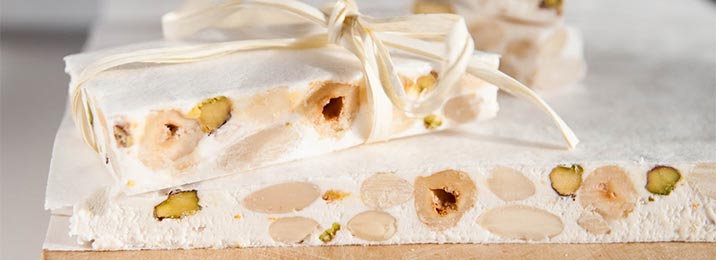
It is precisely the word cubbaita that gives us a less italocentric and more objective key to interpreting this product, because nougat, understood as "toasted seeds-almonds, hazelnuts, pistachios, pine nuts...-bound by a sweet paste made with honey, egg white, sugar, with or without added flavorings," is far from being just an Italian product. The Sicilian word would seem to come from an Arabic term, which would suggest a Middle Eastern origin for the product. Whether it came from the Middle East or not, north of the Mediterranean we find it in France as touron or nougat, from the late Latin nucatum: before almond cultivation was introduced in Provence in the 17th century, walnuts were used to make it. In Spain, where it is documented in written texts since the 15th century, it takes the name turrón, an etymon very similar to the Italian one, whose most credited origin is from the Latin verb torrere, to toast.
Referring to the broader concept of "seeds bound by a sweet paste" allows us to make an even more unexpected discovery: nougat is actually part of a boundless family of products, packaged in a territory ranging from the Slavic countries to the Middle East to India, under the almost ubiquitous name of halva. They are, arguably, the oldest sweets in the world, and precisely for this reason the most genuine and closest to the roots of our taste. Roots, which would be worth rediscovering and reevaluating