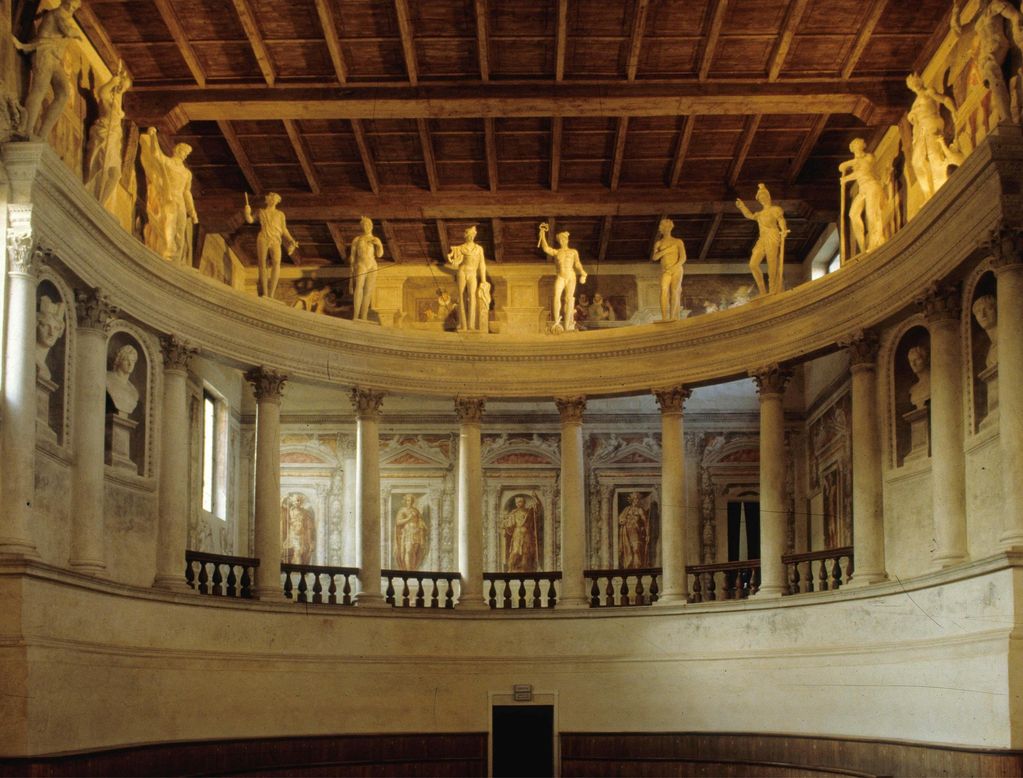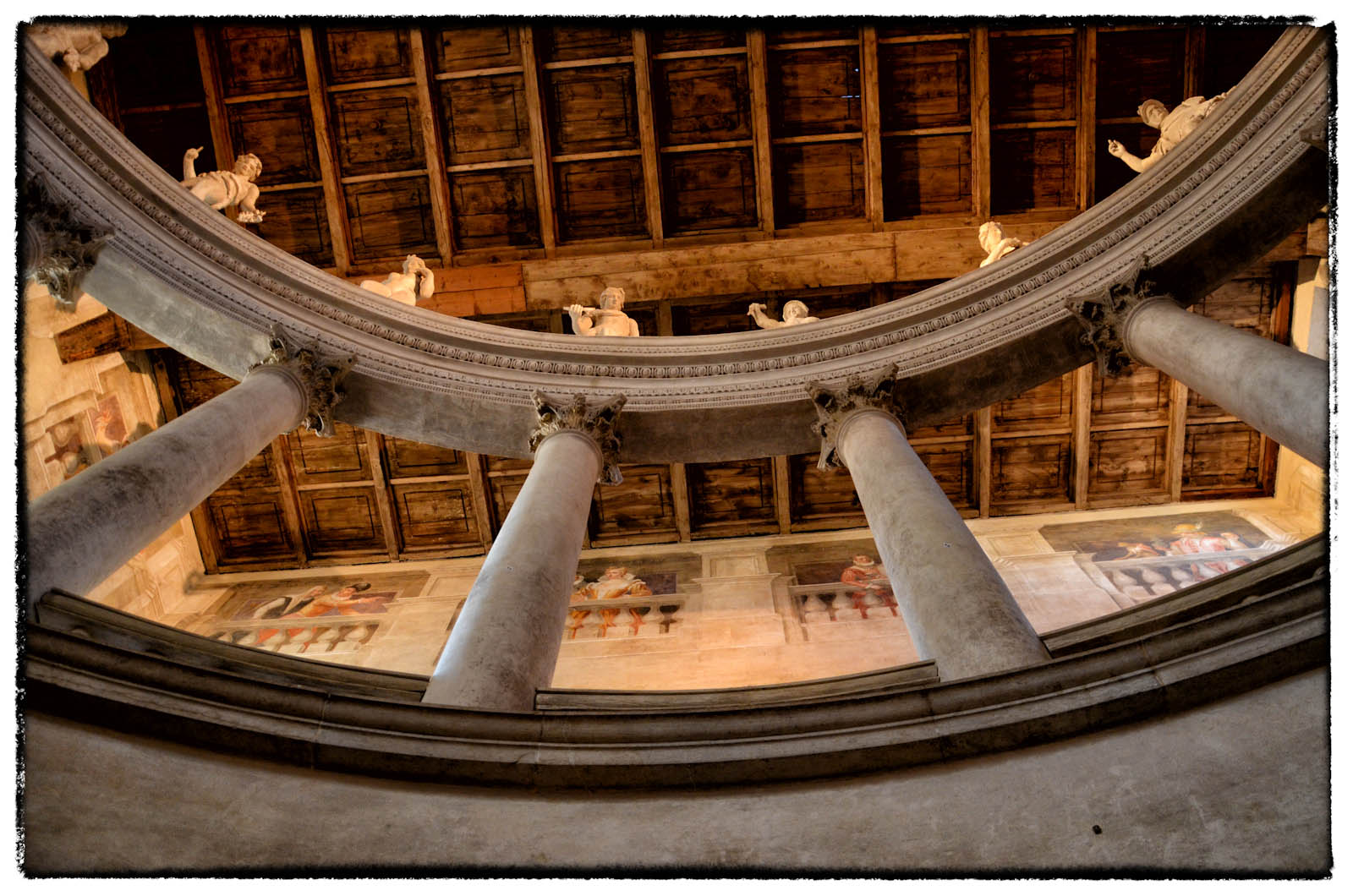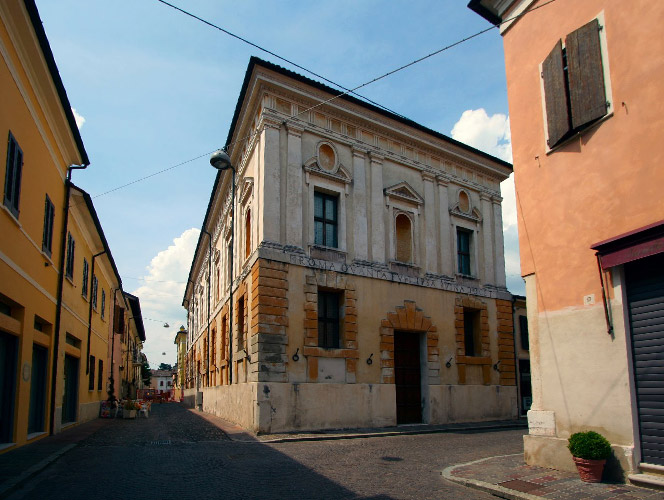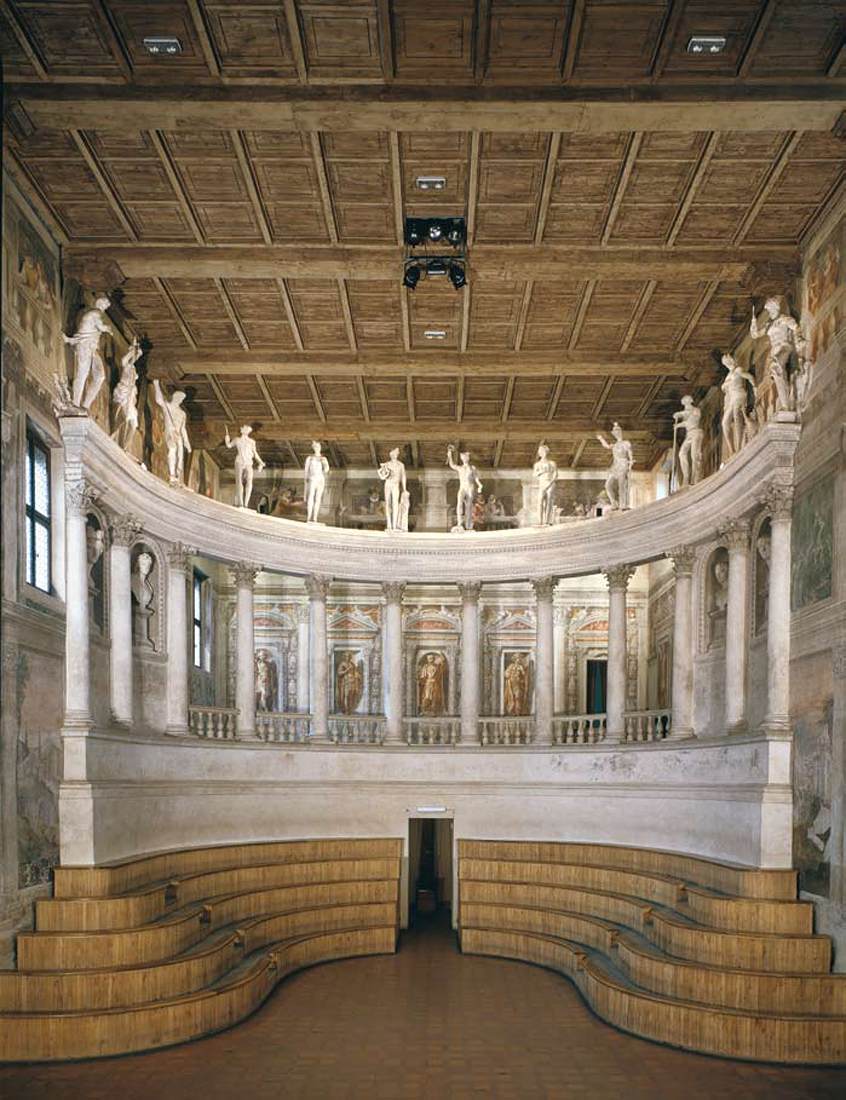

ioiello of rare beauty, the first example of a stable theater in Europe, plays a major role in European theater buildings. It was Vincenzo Scamozzi, a veteran of the construction of the Teatro Olimpico in Vicenza, who in 1588 drew for Duke Vespasiano the plans for a court theater built between 1588 and 1590. The elegant exterior has 2 orders: the lower, with windows, portals, and ashlar-contoured corners resting on a high plinth, and the upper, distinguished by paired Doric pilasters, niches, and windows surmounted by triangular and curved gables containing ovoid cups. The string-course fascia bears the inscription in capitals ROMA QVANTA FVIT IPSA RVINA DOCET (the ruins themselves teach how great Rome was), a motto found on the title page of 2 of the 7 books on architecture written by the Bolognese Sebastiano Serio. The rectangular hall is divided into 2 squares separated by the short rectangular orchestra: one occupied by the stage and the other by the semicircular cavea. An innovation is the entrance in the back reserved for the artists (musicians and actors), which allows access to the dressing rooms. On the raised stage was the fixed stage designed by Scamozzi, which was destroyed in the second half of the 1700s. It depicts an urban perspective, a street lined with noble and bourgeois buildings. The sense of depth was accentuated by the inclination of the stage and the suspended ceiling, a barrel vault made of woven river reeds, stuccoed and painted blue, sloping above the stage itself. Buildings in the stage were made of wood, stucco and painted faux marble and faux stone canvases. The frescoes on either side of the stage were part of the scene and complemented the Scamozzian perspective view. On one side the workshop of a cerusico-barber is recognizable. Of the original layout remains the harmonious loggia consisting of a statuary crowning representing the main Olympian gods. The statues of the gods and the elegant stucco moldings were made by the Venetian sculptor Bernardino Quadri to a design by Scamozzi. Monochrome painted figures in the back wall of the loggia depict Roman emperors. The niches contain 4 busts, depicting the goddess Cybele and three ancient condottieri. The 2 large wall frescoes depict old-fashioned triumphal arches, in whose central archways are urban views. On the left is painted the Piazza del Campidoglio and on the right Castel Sant'Angelo. The entablature surmounting the right arch bears a dedication to Emperor Rudolph II of Habsburg, who in 1577 elevated Vespasian to the rank of duke. The frescoes that run around the entire perimeter of the room immediately under the roof simulate a loggia animated by musicians, comedians, ladies and knights dressed according to the costumes of the late 500s. The reference to Paolo Veronese's style is evident, especially to the frescoes of Villa Barbaro in Maser. The building, completed in February 1590, was inaugurated with carnival celebrations. A stable theater company, salaried by the duke remained in Sabbioneta until Vespasiano's death, following which the theater, like the whole town, experienced a long period of decline.