The red laterite ridges narrow to just a few decimeters in width, with vertical cliffs on both sides. We are at the Pai Canyon, known in Thai as Kong Lan, a system of canyons eroded by wind and monsoon rains in Mae Hong Son province, in northern Thailand. From here, about five kilometers south of the town of Pai, the view encompasses the entire valley: expanses of rice fields, wooded hills, and, on clear days, the silhouettes of the mountains that mark the border with Myanmar.

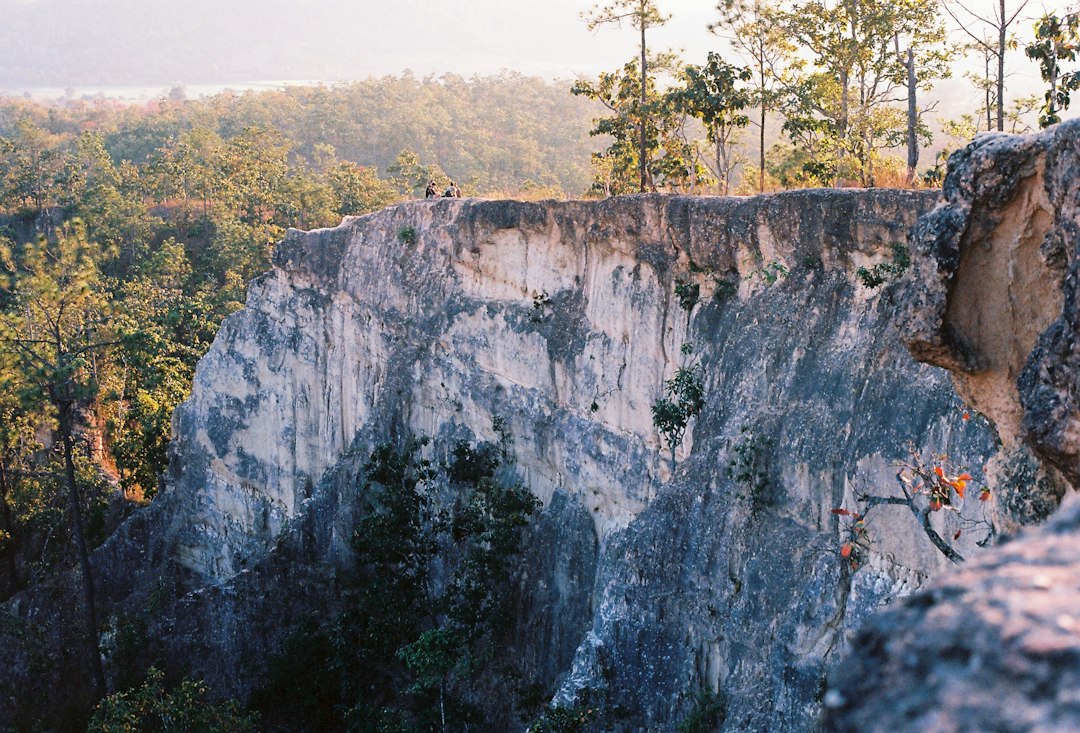
The ground you walk on is made up of laterite, a sedimentary rock rich in iron and aluminum oxides that gives these ridges their characteristic red-orange color. Erosion, accelerated by the heavy rains of the wet season between June and October, has over time shaped a series of sharp ridges that locals traverse at sunset without any handrails or protection. It is not an adrenaline-pumping walk organized for tourists: it is simply the way the locals come to watch the sun set behind the mountains.
The biodiversity around the ridges
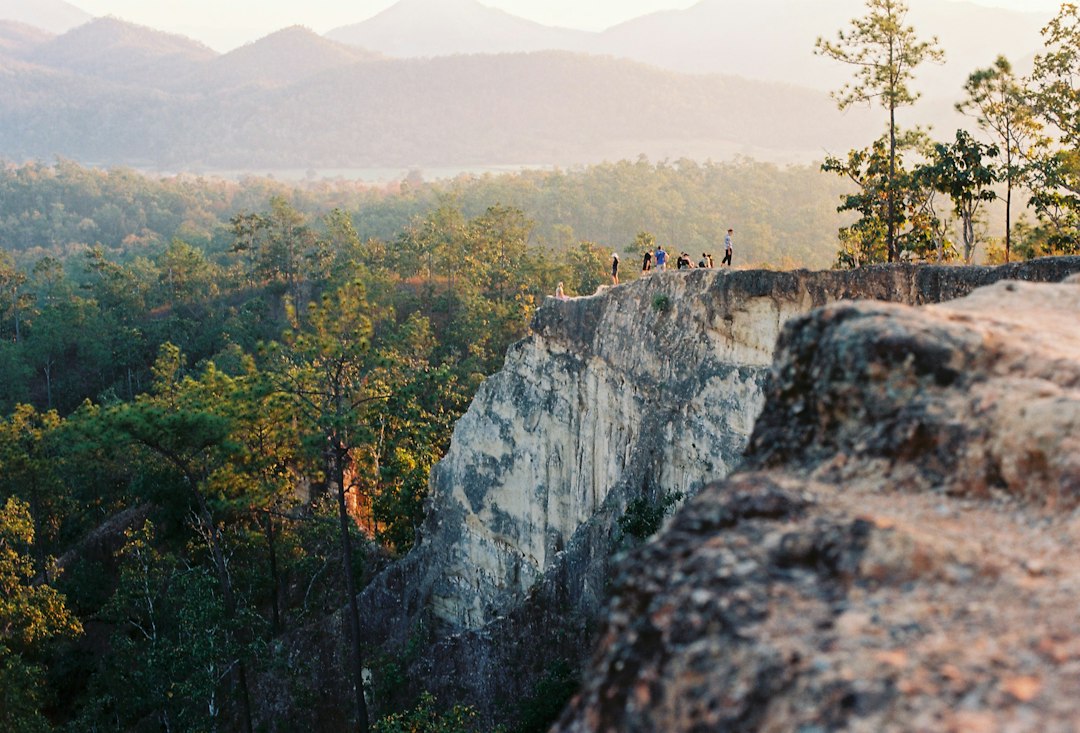
Despite the arid appearance of the eroded ridges, the canyon is surrounded by surprisingly rich vegetation. The dipterocarp forest — deciduous trees typical of northern Thailand — covers the surrounding hills, and in the dry months, the leaves fall, allowing a better glimpse of the fauna moving among the branches. It is common to spot long-tailed macaques (Macaca fascicularis) in the wooded areas at the edges of the canyon, especially in the early morning hours.
The area is part of a larger ecological corridor that connects the forests of Mae Hong Son province with those of Doi Inthanon National Park to the east. This forest continuity promotes the presence of numerous bird species: during the morning hours, it is possible to observe bulbuls, kingfishers, and, with a bit of luck, some specimens of golden-winged woodpecker (Chrysocolaptes lucidus), recognizable by its vibrant plumage. Birdwatchers visiting the Pai region regularly report more than forty species within a few kilometers.
The sunset and the light on laterite
The most frequented time is late afternoon, when the slanting light of the sun enhances the tones of laterite, transforming the ridges into a palette that ranges from ochre to dark red. At this moment, the temperature drops compared to the daytime peak — which in March and April can exceed 35 degrees — and the wind rising from the valley makes the walk more bearable. The sunset in Pai occurs on average between 6:00 PM and 6:30 PM depending on the season.
Walking on the ridges at sunset also means observing the agricultural landscape of the valley that transforms with the light: the flooded rice fields reflect the sky like mirrors, and the villages scattered among the fields light up with the first domestic lights. It is a 360-degree panorama that requires no special equipment, just attention to where you place your feet. The narrowest ridges measure only 30-50 centimeters in width, and the edges are not stabilized.
The Right Season and Nocturnal Wildlife
The dry season, from November to February, offers the best conditions for visiting: the ground is dry and less slippery, visibility is excellent, and nighttime temperatures in the Pai region can drop to 5-10 degrees, creating an unusual atmosphere for Thailand. During this time, the deciduous vegetation is sparser, allowing for better observation of animals moving in the forest.
Those who stay until dusk have the chance to hear — and sometimes see — some nocturnal species. The tokay geckos (Gekko gecko) begin their characteristic call as soon as the light fades, and in the adjacent wooded areas, it is not uncommon to hear the call of the brown fish owl (Ketupa zeylonensis), a species found in the riparian forests of northern Thailand.
How to get there and practical advice
The Pai Canyon is easily reached from the town of Pai by taking Route 1095 south for about five kilometers. Most visitors rent a motorcycle in Pai — the daily cost is around 150-200 baht — and reach the parking area in less than ten minutes. Entrance to the canyon is free and does not require a reservation. The parking area is marked with signs in Thai and English.
It is advisable to arrive at least an hour before sunset to walk along the ridges calmly and without the crowd at the peak moment. Non-slip shoes are essential: sandals or flip-flops significantly increase the risk of slipping on the edges. Bringing enough water is crucial, as there are no refreshment points inside the canyon. The average visit time, including walking along the main ridges and waiting for the sunset, is about two hours.