
← Back

Penitent Magdalene by Canova

Via Garibaldi, 11, 16124 Genova GE, Italia ★★★★☆ 153 views
Itan Hunt
Genova
🏆 AI Trip Planner 2026

Get the free app

Discover the best of Genova with Secret World — the AI trip planner with 1M+ destinations. Get personalized itineraries, hidden gems and local tips. Free on iOS & Android.

🧠 AI Itineraries 🎒 Trip Toolkit 🎮 KnowWhere Game 🎧 Audio Guides 📹 Videos
Scan to download iOS / Android
Scan for AppGallery Huawei users

About Penitent Magdalene by Canova

Penitent Magdalene by Canova - Genova | Secret World Trip Planner

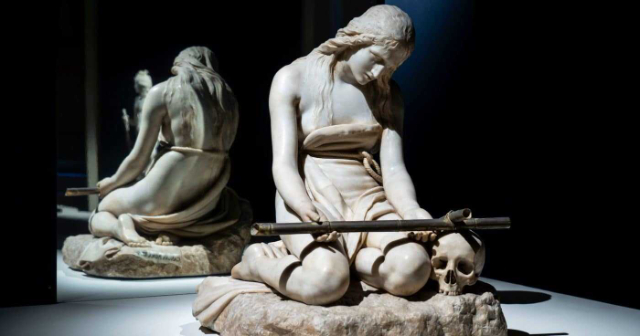
The work, considered one of the masterpieces of artist Antonio Canova's early creative phase, bears the inscription "Canova Roma 1796" on the back. Commissioned by Bassano administrator Tiberio Roberti (1749-1817), a friend of the artist, the sculpture was preceded by a drawing from Bassano's Eb notebook and two sketches, one in earthenware, now in the collections of the Venetian Civic Museums, and one in terracotta, still in the Canova collection of the Museums of Bassano del Grappa, and a plaster model, identified with a sculpture in the Civic Museums of Padua. By April 1794, the sculpture was being worked on and was probably completed soon after the 1796 Ascension.In 1797, because of economic difficulties related to Napoleon's battles in the Venetian countryside, Roberti gave up the purchase of the sculpture. The Venetian critic Francesco Milizia helped Canova find a new buyer in Giovanni Priuli (1763-1801), a Venetian national auditor at the Tribunal of the Sacred Rota, who virtually became the owner of the work before June 1797, but did not take possession of it.During the Directoire period, the sculpture was purchased for 1,000 zecchini (twice as much as originally budgeted!) by Jean-François Julliot, a marchand, a man of great wealth obtained from para-military supplies during the Napoleonic campaigns in Italy and Egypt. A representative in Rome of the Cisalpine Republic, Julliot took the Magdalene to Paris, where it became the first work by Canova to reach the French capital. Later, the work was given to Giovanni Battista Sommariva (1757-1826), a leading member of the Milanese triumvirate that had ruled between 1800 and 1802 the second Cisalpine Republic, who exhibited it at the Paris Salon of 1808. His dazzling appearance was greeted with great enthusiasm by the public and sparked a debate in art criticism regarding the artist's choices with respect to the boundaries between painting and sculpture and the possible interference between the two arts.In the Penitent Magdalene, Canova shaped marble to its extreme possibilities, moving from the extreme smoothness of Magdalene's patinated body to the barely rough-hewn and rough treatment of the base on which she stands. The gilded bronze insert of the cross, together with the realism of the tears and the flowing hair that the artist treated with wax mixed with sulfur to restore its color, appear a conscious meditation on the possibilities of achieving in sculpture the same effects as in painting.


🗺 L'app des trésors cachés

Plan your visit to Genova

Suggested itinerary near Penitent Magdalene by Canova

MAJ+
500.000+ travelers worldwide
  1. 🌅
    Morning
    Penitent Magdalene by Canova
    📍 Genova
  2. ☀️
    Afternoon
    Red Palace
    📍 0 km · Genova
  3. 🌆
    Evening
    The ancient palace stands on a building area purchased in the auction of 1551 and is
    📍 0.1 km · Genova

Buy Unique Travel Experiences

Powered by Viator

See more on Viator.com

Explore nearby · Genova

Frequently Asked Questions

The Penitent Magdalene is housed in the Museums of Bassano del Grappa, where you can also view the original terracotta sketch from Canova's collection. This museum in northern Italy showcases multiple preparatory works and models that document the sculpture's creative development from 1794 onwards.
Created in 1796 and inscribed 'Canova Roma 1796,' this masterpiece was the first work by Antonio Canova to reach Paris, arriving in 1808 for exhibition at the Paris Salon. Its arrival sparked significant critical debate about the boundaries between painting and sculpture, establishing Canova's reputation in France and throughout Europe.
The sculpture was originally commissioned by Bassano administrator Tiberio Roberti but was sold to wealthy French marchand Jean-François Julliot for 1,000 zecchini (double the original budget) during the Directoire period. It later became the property of Giovanni Battista Sommariva, a prominent Milanese politician who exhibited it at the 1808 Paris Salon.
Multiple preparatory pieces document Canova's creative process, including a drawing from Bassano's Eb notebook, an earthenware sketch in the Venetian Civic Museums, a terracotta sketch in the Canova collection at Bassano del Grappa, and a plaster model at the Civic Museums of Padua. These works span from the initial concept through the sculpture's completion around 1796.
In 1797, Tiberio Roberti was forced to abandon his purchase due to severe economic difficulties caused by Napoleon's military campaigns in the Venetian countryside. Venetian critic Francesco Milizia then assisted Canova in finding alternative buyers, eventually leading to its acquisition by Jean-François Julliot and subsequent fame in Paris.