
← Back

Persano's horse

Persano SA, Italia ★★★★☆ 180 views
Lina Serena
Persano
🏆 AI Trip Planner 2026

Get the free app

Discover the best of Persano with Secret World — the AI trip planner with 1M+ destinations. Get personalized itineraries, hidden gems and local tips. Free on iOS & Android.

🧠 AI Itineraries 🎒 Trip Toolkit 🎮 KnowWhere Game 🎧 Audio Guides 📹 Videos
Scan to download iOS / Android
Scan for AppGallery Huawei users

About Persano's horse

Persano's horse - Persano | Secret World Trip Planner

The origin of the Persano horse is traditionally traced back to the year 1742, when Charles III of Bourbon initiated selection to give birth to the "Persano governmental breed." To this end he began to cross, at the Persano Estate in Campania, mares of the Neapolitan, Sicilian, Calabrian and Pugliese breeds with stallions of the Oriental-Turkish breed. In a dispatch dated December 31, 1763, Charles III ordered the introduction of some sire horses from Andalusia in order to improve the breed. Later some pure-blood Arabians and Persians were also introduced.
Persano's horse - Persano | Secret World Trip Planner

For more than a century the Persian was reputed as one of the finest breeds existing in Italy. This was made possible by the large number of arrangements that were made in order to preserve the genetic heritage of the "Royal Breed," as Charles III called it.

The inclusion of some breeding stock from Macklemburg "polluted" the purity of the breed, which was officially suppressed by a decree issued by War Minister Cesare Ricotti in 1874. All the animals were thus sold in the animal markets of Salerno.
Persano's horse - Persano | Secret World Trip Planner

It was only in 1900 that the breed was officially rebuilt, thanks to a new decree issued by the then Minister of War, which also sanctioned its division into two groups:

1st group Purebred Eastern Luati

2nd group Melton pure English blood

The mares, chosen by a committee of senior cavalry officers and veterinarians, were scouted from neighboring herds and Cavalry regiments and schools.

Following the suppression of the Quadruped Supply Center i Persano in 1954, the breed was reduced to about fifty brood mares, which were transferred to the Quadruped Collection Post in Grosseto, under the Ministry of Defense.

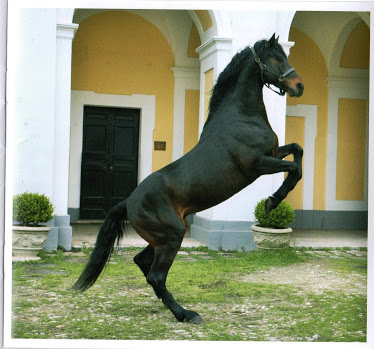
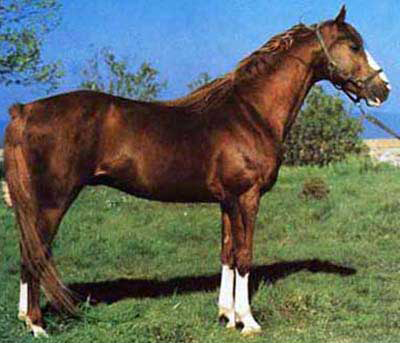
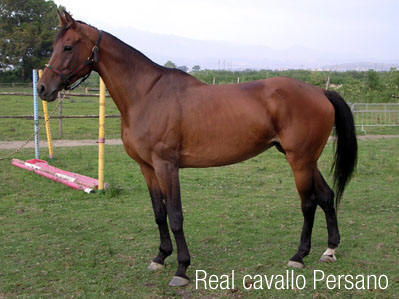
Speaking of conformation, the breed has an elongated head with a long neck. The shoulder is rightly sloping, the withers are pronounced and the dorso-lumbar line is short; the loins are short, the croup is sloping and short; the chest is broad and the thorax is deep. The limbs are regular, fairly slender; the joints appear regular, and the gait is very harmonious and elegant; the loins are regular and the foot is relatively small.


🗺 L'app des trésors cachés

Plan your visit to Persano

Suggested itinerary near Persano's horse

MAJ+
500.000+ travelers worldwide
  1. 🌅
    Morning
    Persano's horse
    📍 Persano
  2. ☀️
    Afternoon
    Paestum | Sanctuary of Hera at the mouth of the Sele River
    📍 7.1 km · Persano
  3. 🌆
    Evening
    National Archaeological Museum of Eboli
    📍 7.9 km · Persano

Buy Unique Travel Experiences

Powered by Viator

See more on Viator.com

Explore nearby · Persano

Frequently Asked Questions

The Persano horse originated in 1742 when Charles III of Bourbon began a selective breeding program at the Persano Estate in Campania, crossing Italian mares (Neapolitan, Sicilian, Calabrian, and Pugliese) with Oriental-Turkish stallions, later adding Andalusian, Arabian, and Persian bloodlines. The breed became one of Italy's finest for over a century but was officially suppressed in 1874 due to genetic contamination from Mecklenburg stock, only to be officially rebuilt in 1900 with two distinct groups.
After the Persano Supply Center closed in 1954, the remaining Persano breeding stock was transferred to the Quadruped Collection Post in Grosseto under the Ministry of Defense. This facility now houses the preserved breed, making it the primary location where visitors can observe these historically significant horses in Italy.
Persano horses are distinguished by their elongated head, long neck, and sloping shoulder with pronounced withers. They have a short dorso-lumbar line and loins, a sloping croup, a broad chest with deep thorax, and regular, fairly slender limbs that reflect their heritage as refined cavalry mounts.
The breed was officially suppressed in 1874 when War Minister Cesare Ricotti discovered that introducing Mecklenburg breeding stock had contaminated the purity of the 'Royal Breed,' resulting in all animals being sold at Salerno markets. The breed nearly disappeared until its official rebuilding in 1900, though numbers remained critically low until only about 50 brood mares survived by 1954.
The 1900 reconstruction divided the Persano breed into two distinct groups: the 1st group consisted of Purebred Eastern Luati horses, while the 2nd group featured Melton pure English blood. Mares for both groups were carefully selected by a committee of senior cavalry officers and veterinarians from neighboring herds and Cavalry regiments and schools.