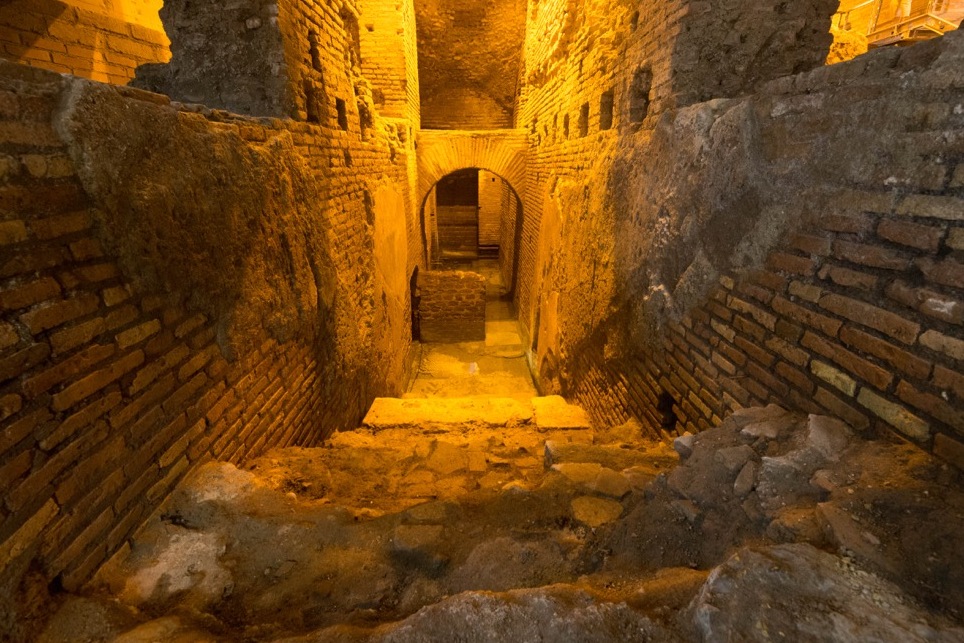

Nestled beneath the bustling streets of Rome, the Vicus Caprarius, or the City of Water, is a compelling testament to the ancient ingenuity of the Romans. Dating back to the reign of Emperor Nero (55-68 A.D.), this underground complex was originally crafted as a vibrant neighborhood, housing shops and workshops. Later, it transformed into a vital cistern associated with the Virgin Aqueduct, which has been supplying water to the legendary Trevi Fountain and other stunning fountains in the city since 19 B.C..
The Vicus Caprarius is not just a remarkable archaeological site; it is a journey into the very heart of Roman civilization. Excavations conducted between 1999 and 2001 during the renovation of the former Trevi Cinema revealed two adjacent buildings that once formed the core of this area. The architectural style is quintessentially Roman, showcasing the practical yet aesthetic brilliance of ancient builders. The remains of a luxurious domus, or Roman house, from the fourth century stand testament to the affluence that once thrived here.
One of the most enchanting features of the Vicus Caprarius is the underground spring that still flows today, creating a serene atmosphere as water glistens on the ancient stone floor. This living water source not only served the needs of the community but also symbolizes the city's connection to its ancient past.
In the heart of Rome, local culture is woven into the fabric of daily life. Traditional Roman customs often revolve around family, food, and community gatherings. Festivals celebrating the Feast of St. John in June and the Festa della Madonna di Guadalupe in December showcase the city's rich religious heritage, bringing together locals and visitors alike in a colorful display of faith and tradition.
Gastronomy in Rome is a feast for the senses, and while exploring the Vicus Caprarius, be sure to indulge in local specialties. Cacio e Pepe, a simple yet flavorful pasta dish made with Pecorino Romano cheese and black pepper, reflects the essence of Roman cuisine. Pair this with a glass of Frascati, a light and crisp white wine, for an authentic dining experience. Don’t miss out on sampling Supplì, deep-fried rice balls filled with mozzarella, which are a beloved street food.
For those intrigued by lesser-known curiosities, the Vicus Caprarius holds many surprises. Despite the grandeur of the Trevi Fountain, few know that it is directly linked to this underground network of water. Additionally, the site has inspired countless artists and filmmakers who have sought to capture the enchanting interplay between water and architecture in their works. The quiet ambiance here contrasts sharply with the bustling streets above, offering a rare glimpse into the serenity of ancient Roman life.
When planning your visit to the Vicus Caprarius, the best time is during the shoulder seasons of spring (April to June) and autumn (September to October) when the crowds are thinner, and the weather is pleasantly mild. The site is relatively small, so allow an hour to fully absorb its historical significance. Make sure to look for the original water channels and the exquisite frescoes that hint at the opulence of the homes that once stood above.
In conclusion, the Vicus Caprarius is a hidden gem in the heart of Rome that beautifully encapsulates the city's historical richness and cultural vitality. This site not only serves as an archaeological wonder but also as a reminder of the water that has sustained Rome through the ages.
For a truly personalized experience in exploring the wonders of Rome, consider using the Secret World app to curate your AI-driven itinerary.