
← Back

Royal Theater of Parma

Str. Giuseppe Garibaldi, 16, 43121 Parma PR, Italia ★★★★☆ 337 views
Klara Gardini
Parma
🏆 AI Trip Planner 2026

Get the free app

Discover the best of Parma with Secret World — the AI trip planner with 1M+ destinations. Get personalized itineraries, hidden gems and local tips. Free on iOS & Android.

🧠 AI Itineraries 🎒 Trip Toolkit 🎮 KnowWhere Game 🎧 Audio Guides 📹 Videos
Scan to download iOS / Android
Scan for AppGallery Huawei users

About Royal Theater of Parma

Royal Theater of Parma - Parma | Secret World Trip Planner

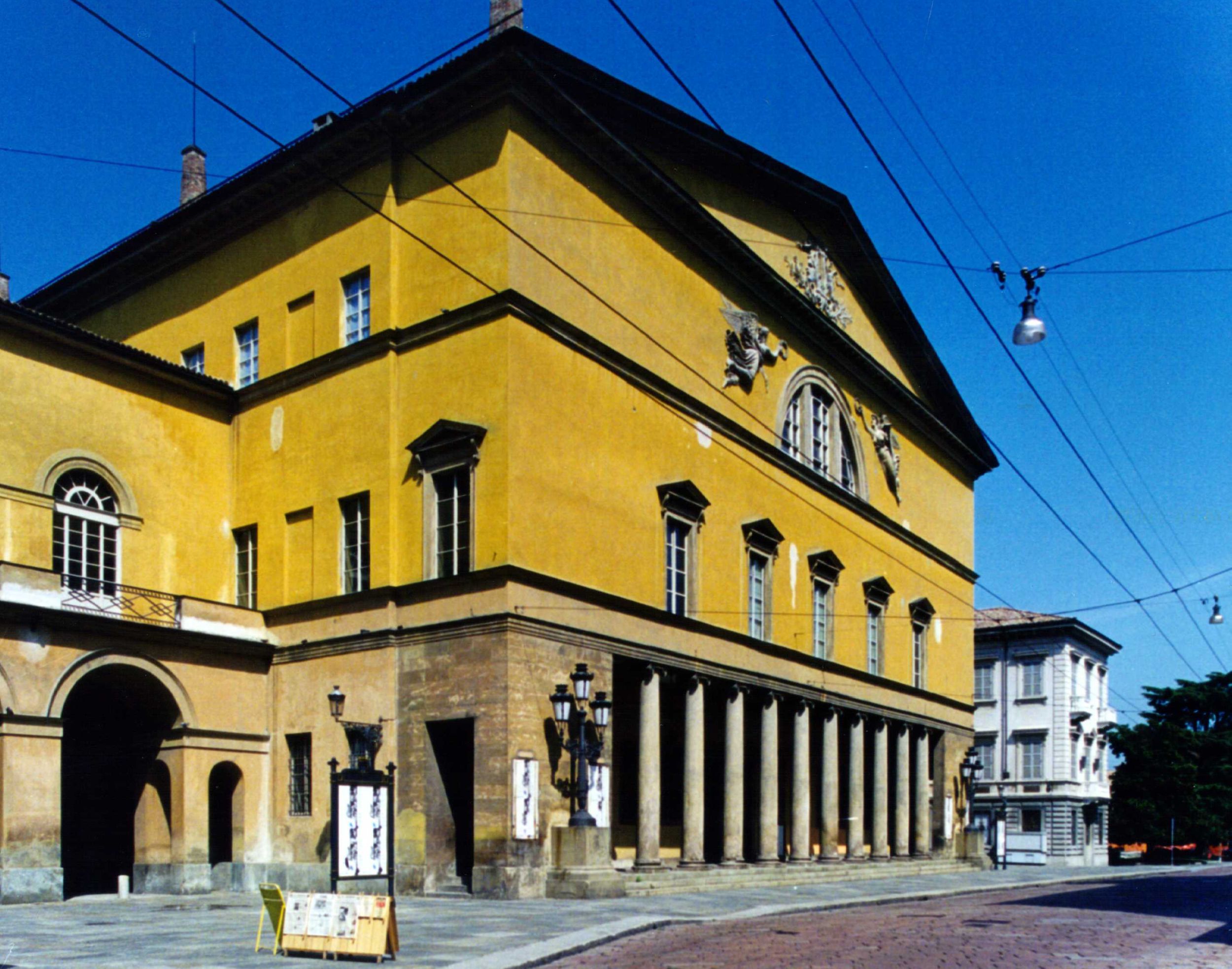
Parma's Teatro Regio was born at the initiative of Duchess Maria Luigia, who considered the Farnese theater too modest to reflect the city's aspirations. Thus it was that between 1821 and 1829, based on a design by Nicola Bettoli, the Teatro Ducale was built and inaugurated on May 16, 1829, with Zaira, specially composed by Bellini for the occasion. The theater changed its name upon the death of Maria Luigia, first becoming the Teatro Reale under the Bourbons in 1849 and then taking on the final name of Teatro Regio in 1860. In 1868 the Teatro Regio was ceded to the City of Parma by the state, as it was considered an economically unsustainable luxury. The facade of the theater is neoclassical in style, and is divided into four parts. The first part consists of an architraved portico, the second by five windows with triangular tympanums, and the third features a central window flanked by two bas-relief "hungers" made by Tommaso Bandini; finally, in the last part is a tympanum with a lyre and two ancient masks.
Royal Theater of Parma - Parma | Secret World Trip Planner

The foyer of the Teatro Regio, square in shape and with a lacunar ceiling supported by two rows of four columns, is currently used for small performances. The foyer vault has frescoes by Giovan Battista Azzi and Alessandro Cocchi, while the walls were decorated by Stanislao Campana.

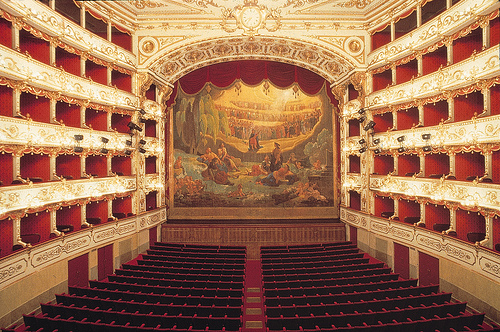
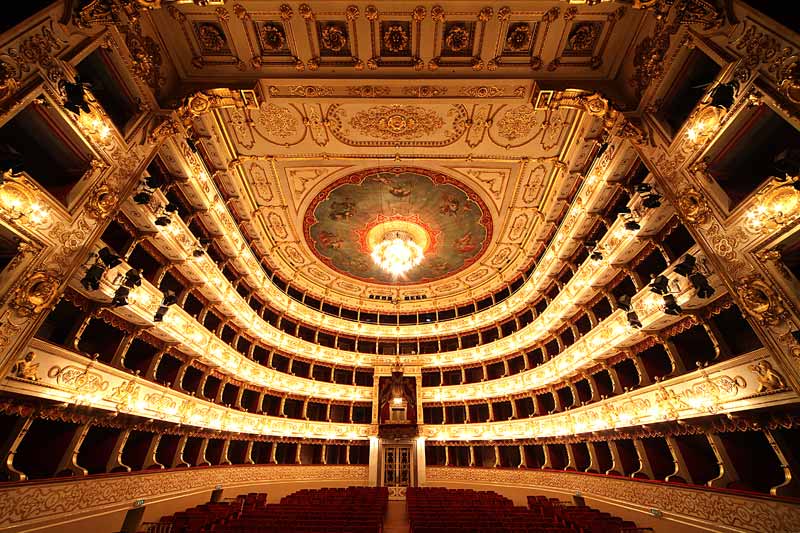
The theater's stalls, decorated by Girolamo Magnani, are elliptical in shape, and can be accessed either centrally from the foyer or laterally to reach the one hundred and twelve boxes of which it is composed. In the center of the latter is the dukes' box. The gallery, on the other hand, presents independent access.
Royal Theater of Parma - Parma | Secret World Trip Planner

As for the decorations of the Teatro Regio, the work was entrusted to Giovan Battista Borghesi, who represented there the greatest playwrights such as Euripides, Seneca, Goldoni, Plautus, Aristophanes, Metastasio and Alfieri. The curtain, also painted by Borghesi, depicts the "Triumph of Wisdom" in honor of Maria Luigia's rule.


Royal Theater of Parma - Parma | Secret World Trip Planner
🗺 L'app des trésors cachés

Plan your visit to Parma

Suggested itinerary near Royal Theater of Parma

MAJ+
500.000+ travelers worldwide
  1. 🌅
    Morning
    Royal Theater of Parma
    📍 Parma
  2. ☀️
    Afternoon
    Parma | Glauco Lombardi Museum
    📍 0.1 km · Parma
  3. 🌆
    Evening
    The Pilotta Palace Museum
    📍 0.2 km · Parma

Buy Unique Travel Experiences

Powered by Viator

See more on Viator.com

Explore nearby · Parma

Frequently Asked Questions

The Teatro Regio was constructed between 1821 and 1829 based on architect Nicola Bettoli's design, and officially inaugurated on May 16, 1829. The opening performance featured Bellini's opera 'Zaira,' which was specially composed for this momentous occasion by the famous composer.
The theater was originally called Teatro Ducale when built under Duchess Maria Luigia's initiative, then became Teatro Reale in 1849 under Bourbon rule, and finally took the name Teatro Regio in 1860. Each name change reflected the political transitions and different rulers of the Parma region throughout the 19th century.
The theater features a stunning neoclassical facade divided into four distinct sections, including an architraved portico, windows with triangular tympanums, and decorative bas-reliefs by Tommaso Bandini. The interior showcases an elliptical stall design with 112 boxes, a square foyer with lacunar ceiling supported by columns, and elaborate frescoes by noted artists like Giovan Battista Azzi and Alessandro Cocchi.
The theater's decorations were created by Giovan Battista Borghesi, who represented the greatest playwrights including Euripides, Seneca, Goldoni, Plautus, Aristophanes, Metastasio, and Alfieri on its walls. The main curtain, also painted by Borghesi, depicts the 'Triumph of Wisdom' as a tribute to Maria Luigia's enlightened rule.
In 1868, the state ceded the Teatro Regio to the City of Parma because maintaining it had become economically unsustainable, despite its status as a prestigious cultural landmark. This transfer marked an important moment in the theater's history, allowing it to continue operating as a public cultural institution rather than a royal facility.