





Suessula also known as Suessola, was an ancient town in Campania of Osca and Etruscan origin. It declined because it was destroyed by the Saracens, the inhabitants abandoned it and it was never rebuilt, its memory was lost due to swamping and afforestation of the area, rediscovered only in the second half of the 1800s. It is located in the locality: "Calabricito" in the northeastern part of the municipality of Acerra. Being in a strategic position, it was crossed by the via Popilia, the most important road of antiquity in southern Italy. It was dominated by the Oscans, and later by the Etruscans who included it in a dodecapolis with other ancient centers of Campania. It was the scene of several battles between Samnites and Romans, who kept a large part of their army stationed there to defend themselves against the Samnites.
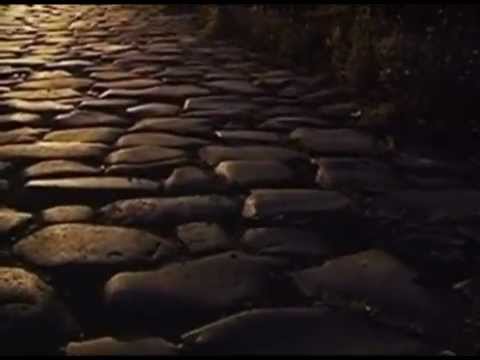
Memorable was the battle of Suessula between Romans and Samnites under the walls of this city in the year 341 B.C.: in it the Romans commanded by Consul Marcus Valerius Corvo defeated the Samnites. In 339 B.C. it became a Roman dominion as civitas sine suffragio.
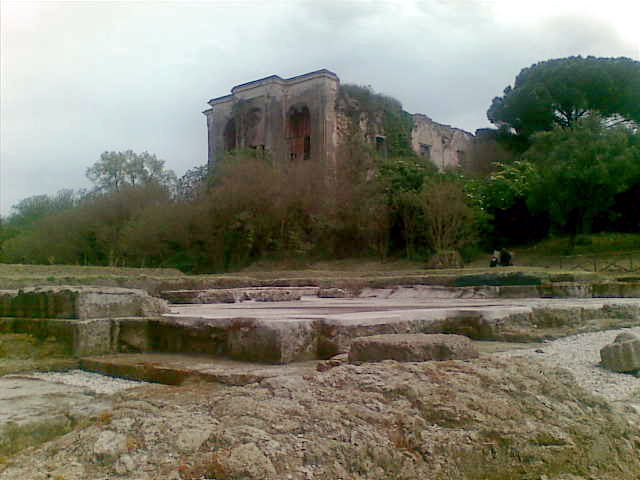
In Republican times it was municipium and later prefecture after the ruin of Capua, then military colony by decree of Sulla. In the early Middle Ages it was a bishopric and the seat of a Lombard gastaldate. In the year 880 it was destroyed by the Saracens. It was rich in monuments and churches: the remains of the ancient cathedral remained visible until the late 18th century. In the course of an inexorable slow decline, the inhabitants gradually abandoned it, until its memory was practically lost; almost a hundred and fifty years after its destruction it was still inhabited, as shown by a notarial deed of 1028 found by historian Gaetano Caporale. Occupying the area by a forest called "Calabricito," Ferdinand I King of Naples made it a hunting reserve until 1830; having a building called "Casina Spinelli" (now in ruins) built there in 1778, on the remains of the ancient city. The peculiarity of the casina lies in the fact that the building incorporates a tower from the Lombard period. First excavation essays to bring Suessula to light were undertaken in 1872 until 1886 by the Spinelli counts of Scalea, owners of the area and of the villa with the adjoining Longobard tower. Numerous finds of exceptional workmanship were discovered. They were located in the ancient mansion, which became one of the richest private museums of the period. Many Italian and foreign scholars (suffice it to mention Amedeo Maiuri and Friedrich von Duhn[1]) did not fail to visit it when they were passing through Naples.
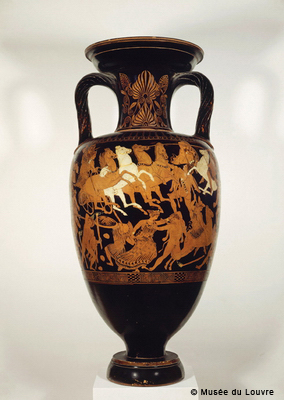
Visits were made until the eve of World War II: in 1943 the German command occupied part of the villa, which was respected including its museum until October of that year: in that month, before abandoning the villa, German officers looted its gold jewelry, a particular gold called "spinelli gold."
The looted and to this day unrecovered items in addition to their material value had a historical one, being very rare jewelry from the archaic period, unique and irreplaceable examples of ancient goldsmith art. In 1945, the year in which the war ended, the Spinelli casina turned out to be stripped of all the 18th-century interior furnishings, because they were used by Anglo-American troops as firewood, except for the display cases that contained the most important part of the ancient artifacts.
Almost the entire collection turned out to be intact except for a few broken vases of lesser value as recounted by Maiuri in an article written in the periodical "Il Fuidoro" [2].
Since the place was no longer safe, the Spinelli widow donated much of the collection to the National Archaeological Museum of Naples - under the name "Spinelli Collection" - where it is still displayed in special showcases in the Prehistoric Section
The villa building is currently protected as an asset of historical-archaeological interest by both Law No. 1089 of 01/06/39 and Presidential Decree No. 616 of 1977, as amended.
Sore note: the ancient city brought to light today is only a small portion of what it must have been in the past, archaeologists have speculated that the extent would be greater than that of the archaeological site of Pompeii...