





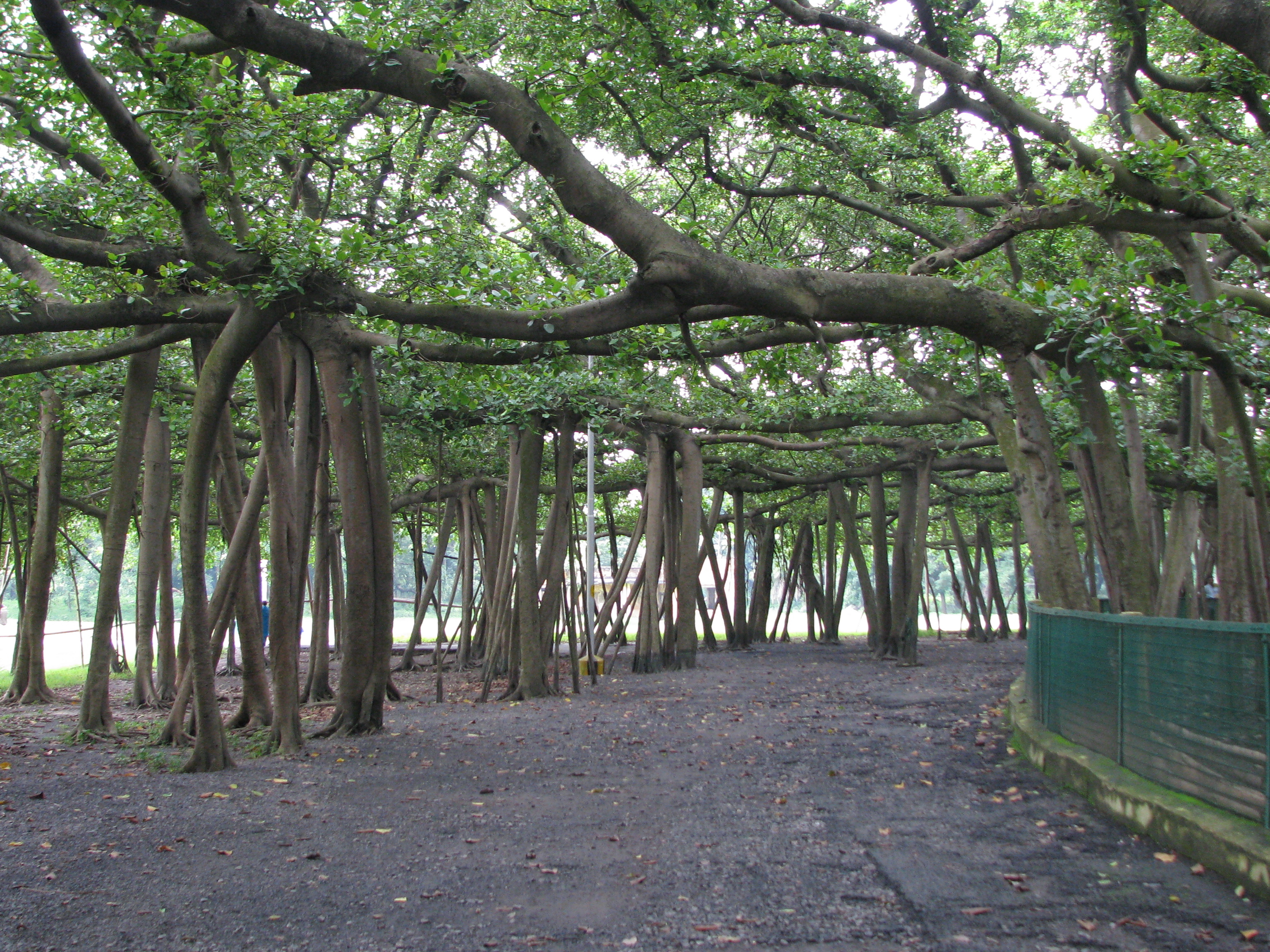
The Great Banyan Tree in the Acharya Jagadish Chandra Bose Botanical Garden, Howrah, stands as a living testament to nature's grandeur and resilience. Sprawling across approximately 14,500 square meters, this botanical marvel is not just a tree but a veritable forest in its own right, captivating visitors with its sheer scale and the intricate web of aerial roots that give it life.
The history of the Great Banyan Tree is interwoven with the colonial past of India. Planted over 250 years ago, it predates the formal establishment of the botanical garden, which was founded in 1787 by Colonel Robert Kyd. Originally intended to cultivate plants for commercial exploitation, the garden evolved into a center for botanical research. The remarkable growth and survival of the banyan tree, especially through challenges like cyclones and fungal diseases, symbolize endurance and adaptability. Over the centuries, it has become a natural monument, outliving the era of British rule and continuing to thrive in India's vibrant post-colonial landscape.
Architecturally speaking, the tree defies traditional definitions. Its architecture is that of nature itself, with no single trunk but a network of prop roots that create an illusion of individual trees. These roots descend from branches, embedding themselves into the ground and expanding the tree's footprint. This unique structure has inspired many artists and photographers, making it a subject of countless artistic interpretations. The tree's image is a staple in local art, often depicted in paintings and photographs that capture its mystical and serene presence.
Culturally, the Great Banyan Tree holds a revered place in local traditions. In Hinduism, the banyan tree is considered sacred and is associated with longevity and immortality. It is often linked to Lord Krishna and is a symbol of eternal life, due to its seemingly endless growth. Local festivals like Vat Savitri, where married women pray for the well-being and long lives of their husbands, often involve rituals around banyan trees, highlighting the cultural significance of such trees in Indian society.
For the gastronomically inclined, a visit to Howrah is not complete without sampling local Bengali cuisine. The region is famous for its diverse and flavorful dishes, such as machher jhol (fish curry), shorshe ilish (hilsa fish in mustard sauce), and rosogolla, the syrupy sweet that has become synonymous with Bengali culinary heritage. While these dishes are not directly connected to the banyan tree, they are integral to the cultural experience of visiting the region.
Beyond its well-known status, the Great Banyan Tree harbors several lesser-known curiosities. It holds the record for being the widest tree in the world, yet it remains a hidden gem for many tourists who flock to Kolkata. Despite its size, the tree's original trunk succumbed to a fungal attack in 1925, but its absence has only allowed the network of aerial roots to flourish, creating an even more expansive canopy. Visitors often miss the fact that walking beneath its shade can feel like stepping into an ancient, natural cathedral, with sunlight filtering through the leaves in a dance of light and shadow that is both mesmerizing and meditative.
For those planning to visit, the best time to explore the Acharya Jagadish Chandra Bose Botanical Garden is during the cooler months from October to March. This period offers pleasant weather and the opportunity to enjoy the garden's diverse flora without the sweltering heat of the summer. As you wander through the garden, take time to observe the diverse species of plants collected from around the world, enhancing your appreciation of the Great Banyan Tree's unique place in this verdant sanctuary.
To make the most of the visit, remember to wear comfortable walking shoes, as the garden covers a vast area, and keep an eye out for the various bird species that inhabit the space, adding a lively soundtrack to your exploration. With its rich history, cultural depth, and natural beauty, the Great Banyan Tree is not just a site to behold but an experience that leaves an indelible mark on every visitor.