
← Back

Veiled Christ

Via de Sanctis Francesco, 80134 Napoli, Italia ★★★★☆ 316 views
Katia Dallas
Napoli
🏆 AI Trip Planner 2026

Get the free app

Discover the best of Napoli with Secret World — the AI trip planner with 1M+ destinations. Get personalized itineraries, hidden gems and local tips. Free on iOS & Android.

🧠 AI Itineraries 🎒 Trip Toolkit 🎮 KnowWhere Game 🎧 Audio Guides 📹 Videos
Scan to download iOS / Android
Scan for AppGallery Huawei users

About Veiled Christ

Veiled Christ - Napoli | Secret World Trip Planner

In the intentions of the commissioner, the statue was to be executed by Antonio Corradini, who had already sculpted Modesty for the prince. However, Corradini died in 1752 and only had time to finish a terracotta sketch of the Christ, which is now in the Museum of San Martino.
Veiled Christ - Napoli | Secret World Trip Planner

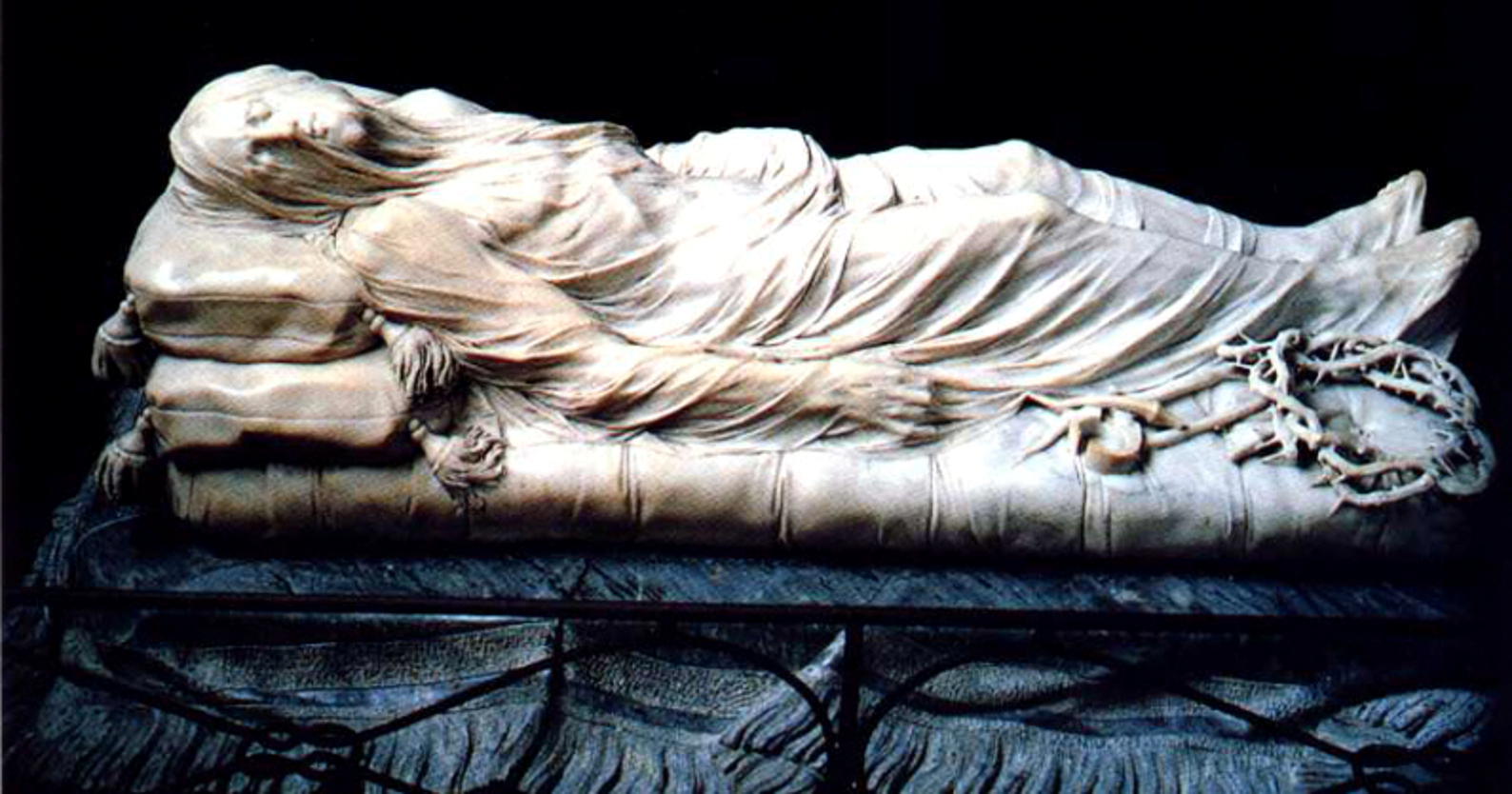
So it was that Raimondo di Sangro commissioned a young Neapolitan artist, Giuseppe Sanmartino, to make "a life-size sculpted marble statue representing Our Lord Jesus Christ dead, covered by a transparent shroud made from the same block as the statue."

Sanmartino took little account of the Venetian sculptor's earlier sketch. As in the Modesty, in the Veiled Christ the original stylistic message is in the veil, but Sanmartino's late Baroque palpitations and sentiments imprint the shroud with a movement and signification far removed from Corradini's canons. The artist's modern sensibility sculpts, fleshes out the lifeless body, which the soft covers mercifully gather, on which the tormented, convulsive rhythms of the veil's folds etch a deep suffering, as if the pitiful covering made the poor limbs even more naked and exposed, even more inexorable and precise the lines of the tortured body.

Veiled Christ - Napoli | Secret World Trip Planner

The swollen and still throbbing vein on the forehead, the piercings of the nails on the feet and thin hands, the hollowed-out and relaxed side finally in the liberating death are the sign of an intense research that gives no room for preciosity or school canons, even when the sculptor meticulously "embroiders" the edges of the shroud or dwells on the instruments of the Passion placed at Christ's feet. Sanmartino's art here resolves itself into dramatic evocation, making Christ's suffering a symbol of the fate and redemption of all humanity.


🗺 L'app des trésors cachés

Plan your visit to Napoli

Suggested itinerary near Veiled Christ

MAJ+
500.000+ travelers worldwide
  1. 🌅
    Morning
    Veiled Christ
    📍 Napoli
  2. ☀️
    Afternoon
    The crocchè, a Neapolitan delicacy
    📍 0 km · Napoli
  3. 🌆
    Evening
    Naples and the Unveiled Christ
    📍 0.1 km · Napoli

Buy Unique Travel Experiences

Powered by Viator

See more on Viator.com

Explore nearby · Napoli

Frequently Asked Questions

Giuseppe Sanmartino, a young Neapolitan artist, created the Veiled Christ after the original commissioner Antonio Corradini died in 1752, leaving only a terracotta sketch. Sanmartino's interpretation of the marble statue became a masterpiece of late Baroque sculpture, departing significantly from Corradini's original stylistic vision.
The transparent shroud is carved from the same marble block as the entire statue, creating an illusion of delicate fabric draping over Christ's body. Sanmartino's dramatic late Baroque style gives the veil's folds convulsive rhythms and deep movement that emphasize Christ's suffering, making the covering appear to expose rather than conceal the tortured form beneath.
Corradini's terracotta sketch of the Christ is housed in the Museum of San Martino in Naples, allowing visitors to compare the original artistic vision with Sanmartino's final marble sculpture. This provides valuable context for understanding how the commissioned work evolved after the Venetian sculptor's death.
Pay close attention to the swollen vein on Christ's forehead, the visible nail piercings on his feet and hands, and the meticulously carved edges of the shroud that show Sanmartino's technical mastery. At Christ's feet, you'll also find carefully sculpted instruments of the Passion, all contributing to the statue's powerful conveyance of human suffering and redemption.
While both artists focused on the veil as the stylistic centerpiece, Sanmartino's late Baroque sensibility infused the shroud with dramatic movement and emotional intensity, creating convulsive rhythms that emphasize anguish. Unlike Corradini's more restrained approach, Sanmartino rejected precious ornamentation in favor of raw emotional expression, transforming Christ's suffering into a universal symbol of humanity's fate and redemption.