← Back

Villa of the Mysteries

80045 Pompei NA, Italia ★★★★☆ 236 views
Clarissa Burt
Pompei
🏆 AI Trip Planner 2026

Get the free app

Discover the best of Pompei with Secret World — the AI trip planner with 1M+ destinations. Get personalized itineraries, hidden gems and local tips. Free on iOS & Android.

🧠 AI Itineraries 🎒 Trip Toolkit 🎮 KnowWhere Game 🎧 Audio Guides 📹 Videos
Scan to download iOS / Android
Scan for AppGallery Huawei users

About Villa of the Mysteries

Villa of the Mysteries - Pompei | Secret World Trip Planner

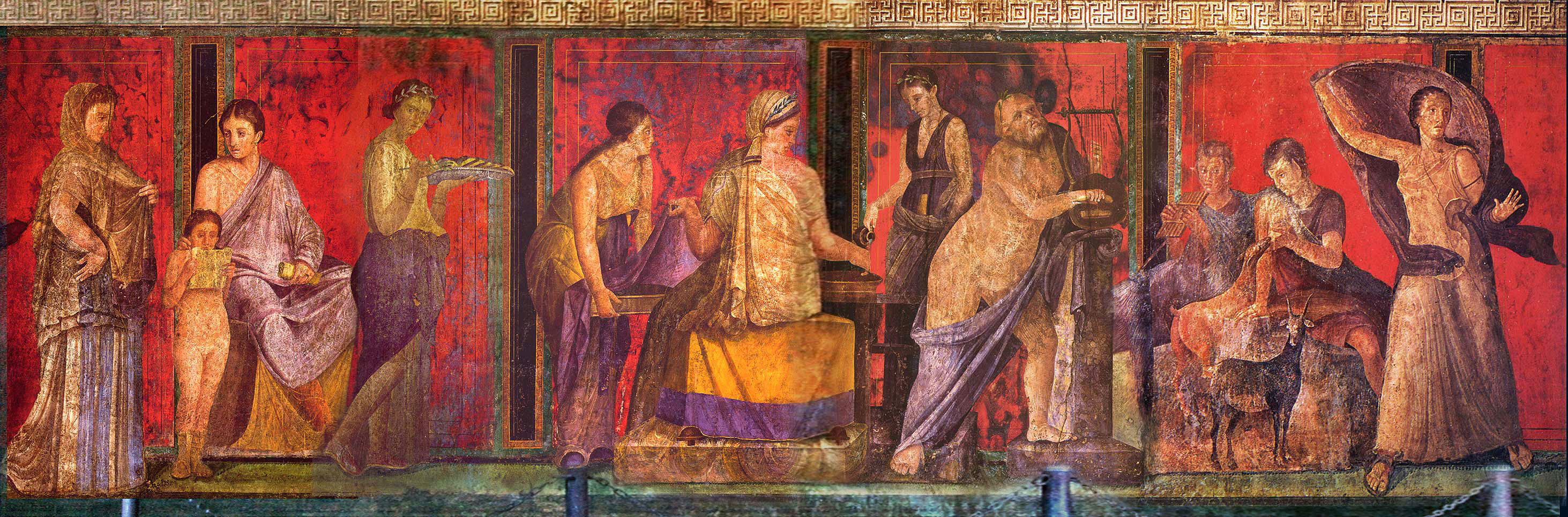
The grandiose Villla of the Mysteries is perhaps the best-known building of all the excavations, comprising about sixty rooms and the ruins of a suburban Roman dwelling that stands about 800 meters northwest of Pompeii. It takes its name from frescoes in one room of the dwelling that most scholars believe depict the initiation of brides into Dionysian pleasures. Partially discovered in 1909-1910, the complex is an admirable example of a mixture of villa d'otium and villa rustica, possibly belonging to the family of the Istacidii, among the most important in Augustan-era Pompeii. It presents, according to the most up-to-date studies, an architectural layout dating back to the first century B.C. with successive transformations up to the time of the eruption (79 A.D.). The present-day layout of the villa is due to the interventions that took place following the earthquake of 62 AD, when the conversion of the building from a residential villa to an agricultural and productive complex was initiated. At the time of the eruption in 79 AD, work was in progress to adapt the structure by the last owner. The luxurious residential quarter is located on the west side and faced the sea, setting on a striking perspective axis consisting in sequence of atrium, tablinum and living room enclosed at the end by a panoramic fenestrated semicircular exedra. From the living room with exedra there is access through a side passage to the Hall of Mysteries. The name of the villa is due to the frescoes that adorn this triclinium. The Hall of Mysteries is crowned by an extraordinary pictorial cycle, widely discussed by scholars, that occupies the middle band of the room, above a decorated faux-marble plinth that serves as a podium. The scene is dominated by the divine couple placed in the center of the back wall, in whom Dionysus and Aphrodite (or Ariadne) are identified. The climax of narrative tension is reached in the ritual scene in which a kneeling woman uncovers her phallus while a winged figure is intent on ritual scourging.

Villa of the Mysteries - Pompei | Secret World Trip Planner
🗺 L'app des trésors cachés

Plan your visit to Pompei

Suggested itinerary near Villa of the Mysteries

MAJ+
500.000+ travelers worldwide
  1. 🌅
    Morning
    Villa of the Mysteries
    📍 Pompei
  2. ☀️
    Afternoon
    Pompei: House of the geometric mosaics
    📍 0 km · Pompei
  3. 🌆
    Evening
    The Sanctuary of Pompeii
    📍 0.4 km · Pompei

Buy Unique Travel Experiences

Powered by Viator

See more on Viator.com

Explore nearby · Pompei

Frequently Asked Questions

The villa takes its name from the extraordinary frescoes in the Hall of Mysteries, a triclinium (dining room) that depicts what scholars believe is the initiation of brides into Dionysian pleasures. The pictorial cycle features a divine couple identified as Dionysus and Aphrodite (or Ariadne) at the center of the back wall, surrounded by ritual scenes of significant narrative and religious importance.
The Villa of the Mysteries stands approximately 800 meters northwest of the main Pompeii archaeological site as a suburban Roman dwelling. It is easily accessible from Pompeii and should be included as part of your Pompeii visit, with convenient transportation options available from the main excavation area.
The Villa of the Mysteries is an exceptional example combining both villa d'otium (a luxurious residential villa) and villa rustica (an agricultural working estate), possibly belonging to the important Istacidii family during the Augustan era. The complex underwent significant transformations from its original first century B.C. construction through the 79 A.D. eruption, particularly after the 62 A.D. earthquake when it was converted into an agricultural and productive complex.
Begin with the luxurious residential quarter on the west side, which features a striking perspective axis of atrium, tablinum, and living room leading to a panoramic fenestrated semicircular exedra that once faced the sea. From there, proceed through a side passage to the Hall of Mysteries, the villa's crowning feature and main attraction with its spectacular frescoed walls.
The Villa of the Mysteries was partially discovered during 1909-1910 and represents one of the best-preserved buildings from Pompeii's excavations. The complex has been subject to up-to-date archaeological studies that have revealed its architectural development from the first century B.C. through successive transformations until the Vesuvius eruption in 79 A.D.