





← Back

Volterra

56048 Volterra PI, Italia ★★★★☆ 166 views
Sara Fly
Volterra
🏆 AI Trip Planner 2026

Get the free app

Discover the best of Volterra with Secret World — the AI trip planner with 1M+ destinations. Get personalized itineraries, hidden gems and local tips. Free on iOS & Android.

🧠 AI Itineraries 🎒 Trip Toolkit 🎮 KnowWhere Game 🎧 Audio Guides 📹 Videos
Scan to download iOS / Android
Scan for AppGallery Huawei users

About Volterra

Volterra - Volterra | Secret World Trip Planner

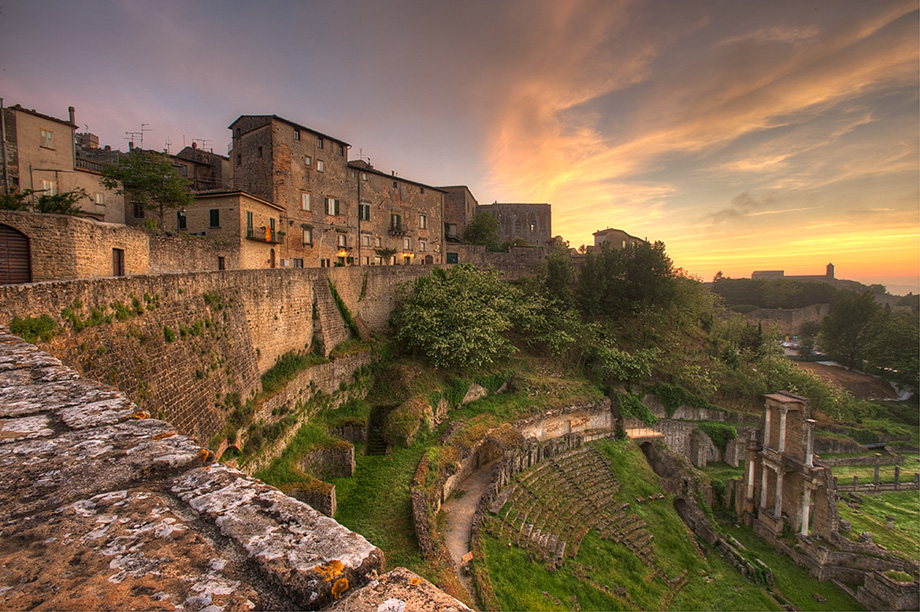
In Volterra, history has left its mark with continuity from the Etruscan period to the nineteenth century, with artistic and monumental testimonies of great importance, which can be admired simply by walking through the streets of the historic center, but also by visiting the city's museums: the Etruscan Museum, the Pinacoteca Civica, the Museum of Sacred Art, and the Alabaster Ecomuseum.

Volterra - Volterra | Secret World Trip Planner

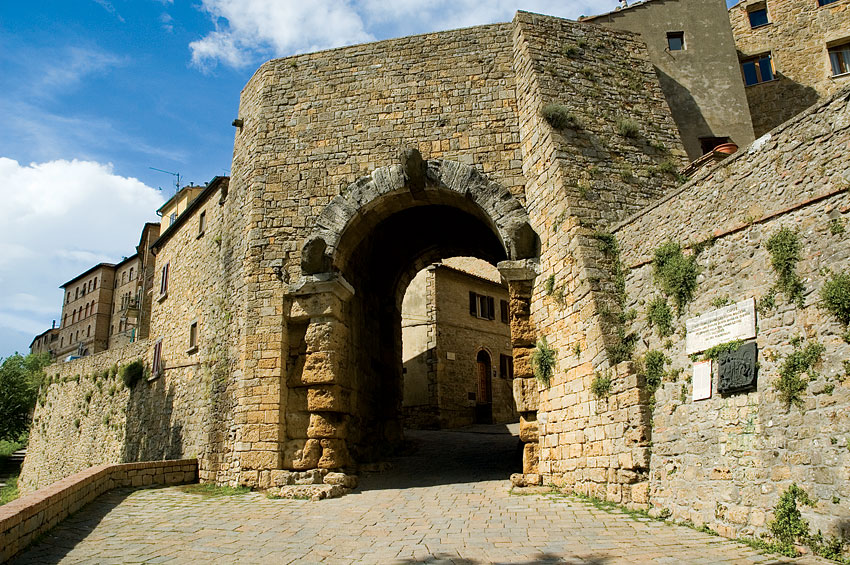
Alongside these monuments one can find an unspoiled landscape, a quality of life still on a human scale, and a unique artistic craftsmanship: alabaster. Volterra today is a city with a characteristic medieval appearance, where it is still possible to savor the atmosphere of an ancient Republic of the Communal Age, thanks to the relative isolation that has limited industrial and commercial development, preventing the building havoc that often accompanies economic development. Modern Volterra is enclosed almost completely within the circle of the thirteenth-century walls and which are the culmination of a process of urban expansion that, begun around the year 1000 found its conclusion in the early 1300s with the construction of defensive systems near the main gates of the city. In fact, the city reduced to a castrense form in the Late Antique period (sec.V) and whose perimeter is now marked by the Piano di Castello, Porta all'Arco, via Roma, via Buonparenti, via dei Sarti and via di Sotto, developed around the ancient church of Santa Maria (today's cathedral) and the adjoining pratus episcopatus, today Piazza dei Priori, while outside the castrum or castellum, rose, after the year 1000, the borgo di Santa Maria, today Via Ricciarelli, perpendicular to the castle walls, and the borgo dell'Abate, today Via dei Sarti, parallel to the same walls. At the edge of the meadow rise the Incrociate consisting of powerful complexes of towers and constituting the tangible sign of urban development to the east, west and north: these are the crux viarum of the Buomparenti, Sant'Agnolo and Baldinotti. Also in the S.Lazzero area can be seen the old railway station, inagurated in 1912, which connected through bold scaffolding the city to Saline.
Volterra - Volterra | Secret World Trip Planner
🗺 L'app des trésors cachés

Plan your visit to Volterra

Suggested itinerary near Volterra

MAJ+
500.000+ travelers worldwide
  1. 🌅
    Morning
    Volterra
    📍 Volterra
  2. ☀️
    Afternoon
    Bocelli and the beautiful Theatre of Silence
    📍 12.9 km · Volterra
  3. 🌆
    Evening
    Village of Querceto
    📍 16.1 km · Volterra

Buy Unique Travel Experiences

Powered by Viator

See more on Viator.com

Explore nearby · Volterra

Frequently Asked Questions

Volterra offers four major museums showcasing its rich heritage: the Etruscan Museum, the Pinacoteca Civica (civic art gallery), the Museum of Sacred Art, and the Alabaster Ecomuseum. These museums contain artistic and monumental testimonies spanning from the Etruscan period through the nineteenth century, making them essential stops for understanding the city's continuous historical development.
Yes, Volterra is almost completely enclosed within thirteenth-century walls that represent the culmination of urban expansion beginning around 1000 AD and concluding in the early 1300s. These defensive walls with their main gates still stand today, creating the characteristic medieval appearance that defines the city's landscape and helps preserve its historic atmosphere.
Volterra is renowned for its unique artistic craftsmanship in alabaster work, which remains an active and thriving tradition in the city. This distinctive alabaster artistry, combined with the city's unspoiled landscape and human-scale quality of life, sets Volterra apart as a place where traditional crafts are still actively practiced.
Volterra has preserved its medieval appearance and atmosphere due to its relative isolation, which has limited industrial and commercial development that typically accompanies economic growth. This prevented the building destruction and urban sprawl seen in many other cities, allowing visitors to experience the authentic atmosphere of an ancient Communal Age Republic.
Volterra's history spans from the Etruscan period through the nineteenth century, with the medieval city developing from a Late Antique castrense form in the fifth century and expanding significantly from around 1000 AD onward. Visitors can trace this continuous historical evolution by simply walking through the historic center's streets or by exploring its various museums dedicated to different periods.