
← Back

Tomb of Charles Ray

Piazzale Giovanni Battista Resasco, 16137 Genova GE, Italia ★★★★☆ 106 views
Giovanna Merkel
Genova
🏆 AI Trip Planner 2026

Get the free app

Discover the best of Genova with Secret World — the AI trip planner with 1M+ destinations. Get personalized itineraries, hidden gems and local tips. Free on iOS & Android.

🧠 AI Itineraries 🎒 Trip Toolkit 🎮 KnowWhere Game 🎧 Audio Guides 📹 Videos
Scan to download iOS / Android
Scan for AppGallery Huawei users

About Tomb of Charles Ray

Tomb of Charles Ray - Genova | Secret World Trip Planner

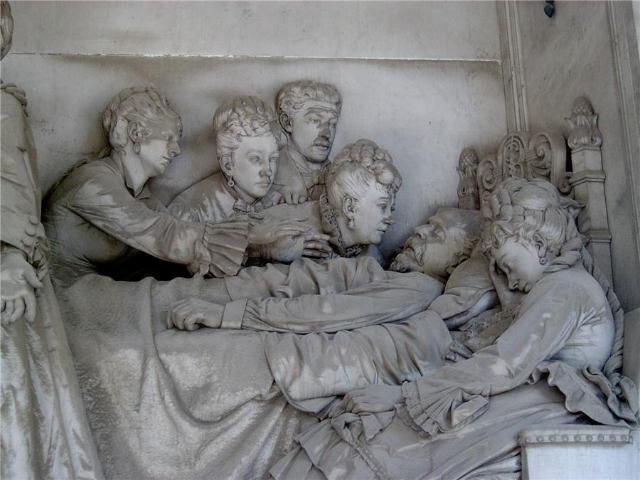
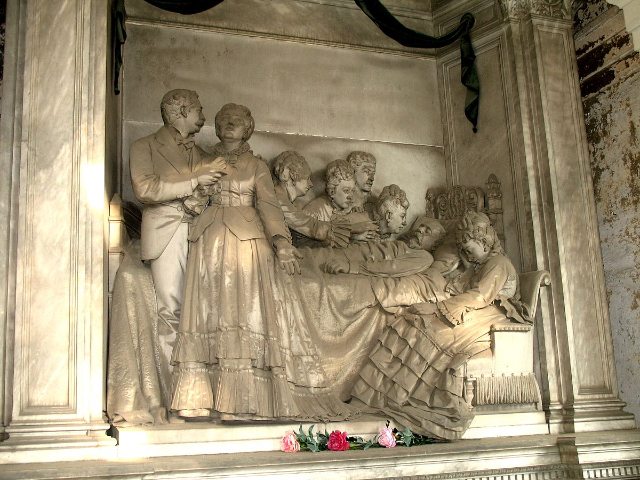
In Sector D of the monumental Staglieno Cemetery in Genoa is the tomb of Carlo Raggio, made by sculptor Augusto Rivalta in 1872. Born in Alessandria in 1837, Rivalta moved to Florence after completing his studies at the Accademia Ligustica di belle arti in 1859, where he worked in Dupré's studio. Rivalta was one of the first artists to adhere to the style of "bourgeois realism," which is characterized by a descriptive and precise approach to representing reality.Carlo Raggio's Funeral Monument is an emblematic example of the bourgeois realist style, which proved particularly suited to express the new conception of death that took hold in the second half of the 19th century. In this style, the representation of death is stripped of any symbolic or spiritual element, and focuses solely on the expression of the grief and loss that the passing of a loved one represents for his or her relatives.Carlo Raggio's tomb is characterized by great attention to detail, both in the depiction of the characters and in the choice of clothing and objects surrounding them. The scene depicts the bed of the deceased, surrounded by grieving family and friends. There are no angelic or symbolic figures to alleviate the suffering of those present, nor is there any hope of redemption for those who are no more.In this way, Carlo Raggio's funeral monument depicts a tragic moment in the life of a family, expressed with a precision and realism that enhance the drama of the scene. Raggio's tomb is thus not only a work of art of great historical and artistic value, but also a valuable document of the mentality and values of 19th-century society.

Tomb of Charles Ray - Genova | Secret World Trip Planner
🗺 L'app des trésors cachés

Plan your visit to Genova

Suggested itinerary near Tomb of Charles Ray

MAJ+
500.000+ travelers worldwide
  1. 🌅
    Morning
    Tomb of Charles Ray
    📍 Genova
  2. ☀️
    Afternoon
    Monumental cemetery of Staglieno
    📍 0 km · Genova
  3. 🌆
    Evening
    The Monumental Cemetery of Staglieno
    📍 0.2 km · Genova

Buy Unique Travel Experiences

Powered by Viator

See more on Viator.com

Explore nearby · Genova

Frequently Asked Questions

The tomb was created by sculptor Augusto Rivalta in 1872. Rivalta was trained at the Accademia Ligustica di belle arti in Genoa and later studied in Florence under the renowned sculptor Dupré, making him one of the pioneering artists of the bourgeois realism movement.
The tomb of Carlo Raggio is situated in Sector D of the monumental Staglieno Cemetery in Genoa, Italy. This 19th-century cemetery is one of Italy's most significant necropolises and features numerous important sculptural works throughout its various sectors.
The tomb is an emblematic example of bourgeois realism, a style characterized by descriptive and precise representation of reality without symbolic or spiritual elements. This style was particularly suited to expressing the new conception of death that emerged in the second half of the 19th century, focusing on genuine grief and loss rather than hope or redemption.
The monument depicts the deathbed of Carlo Raggio surrounded by grieving family and friends, with meticulous attention to detail in their clothing and expressions. Unlike traditional memorial art, there are no angelic or symbolic figures present—only the raw emotion and tragedy of loss rendered with precise realism.
Beyond its artistic merit, Carlo Raggio's funeral monument serves as a valuable historical document reflecting the mentality and values of 19th-century society during a period of significant cultural shift. It represents an important transition in how death and mourning were conceptualized and publicly commemorated during this era.